
A story of discovery
My first attempt to dig into the BSDB’s history was to contact former publications/communications officers of the last two to three decades. This yielded PDF files of newsletters covering the period since 2000. However, little newsletter information appeared to have been held for the period before that. Also former BSDB meetings officers could not help with sufficient relevant documents to reconstruct the conference history.
I also enquired at history archives. For example, the Wellcome Library holds conference documents of the years 1973, 1975, 1976, 1983, 1986-88. But these could only be viewed on-site and, if digitised, could not be made publicly available – hence another dead end.
Furthermore, I followed up on a hint that some old conferences were published as issue supplements in JEEM (precursor of the journal Development), but lengthy searches through Development’s online archive of the 70s and 80s revealed only one such issue (BSDB, 1984) – and this exact issue was also the only one we later found as a hard copy (1984-2). However, I learned that in the 80s and 90s it was a requirement for all invited speakers to provide a paper for publication in a JEEM or Development Supplement, something which all speakers seemed to have willingly agreed to. As Phil Ingham commented to me: “When you look at the calibre of speakers that provided these papers, you get a sense of the very high esteem in which the BSDB meetings were held – basically, all the top developmental biologists in the world wanted to be invited to our meetings (I am sure this is still true)“. Some examples of these special issues are linked out from our meeting documents 1987-3, 1988-1+2 and 1989-1+2.
Finally, I searched for former BSDB members and contacted them one by one. But I was usually informed that potentially helpful documents vanished when offices were cleared out upon retirement – a sign that it might in fact be too late for the BSDB history project.
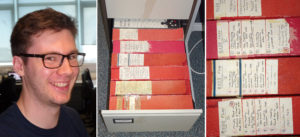
Although none of the attempts yielded significant outcome reaching back into the last millennium, new hope arose when contacting Robert Kelsh (Secretary 2003-08) who pointed out that the same BSDB archive used by Jonathan Slack for his history article should still be with Michael Taylor (Secretary 2008-13) in Cardiff. A few days later, the archive was opened and it was agreed with the BSDB committee that Mike’s student, Thomas Stoneman, would be paid to sort through it and provide an overview. His findings revealed that we had struck gold! There were newsletters from 1979-2002 (#1 to #23-2), an almost complete list of meeting programs (and partly even abstracts) dating back to 1964, and hand-written or printed minutes of committee meetings starting with the foundation meeting in 1948, apart from membership indices of many different years, plenty of correspondence, meeting planning documents, financial statements and contemporary information about other societies, in particular ISDB and EDBO (Fig.1; for more details see the archive list and the archive-curiosities document).
Following our initial euphoria, in came the sobering thoughts of what to do with these materials – and proper archiving and digitisation was (and remains) the obvious ultimate goal. Upon consultation with Carsten Timmermann, science historian here at Manchester, I contacted libraries and history archives, but none of these attempts provided a satisfactory way forward. Pragmatic solutions had to be found, and it was eventually decided that Thomas would continue his work for a while and start digitising key documents including the notebooks of the (London) Embryologists’ Club, all newsletters, and part of the conference documents. I organised the files as they became available, uploaded them as “BSDB Archive” (BSDB comms account) on the free and indexed online repository figshare.com, and designed a specific logo for future branding (Fig.2). To close remaining gaps, Mike Taylor kindly hosted me for a day in June 2018 and, together with Thomas, we searched through the archive using rapid photo-documentation to digitise further interesting finds. Through all these efforts, an important fraction of our documents has now been made publicly available (Box 1).
Box 1. Current holdings of the BSDB archive
The Embryologists Club + SDB
Archive: 10.6084/m9.figshare.5899636 | SDB-1964| 1948-64(#2) | 1948-64(#1) | DOWNLOAD ALL
BSDB Newsletters
Archive: 10.6084/m9.figshare.5827359 | 2016+17(#37+38) | 2015(#36) | 2014(#35) | 2013(#34) | 2012(#33-2) | 2012(#33-1) | 2011(#32-2) | 2011(#32-1) | 2010(#31-2) | 2010(#31-1)| 2009(#30-2) | 2009(#30-1) | 2008(#29-2) | 2008(#29-1) | 2007(#28-2) | 2007(#28-1) | 2006(#27-2) | 2006(#27-1) | 2005(#26-2) | 2005(#26-1) | 2004(#25-2) | 2004(#25-1) | 2003(#24-2) | 2003(#24-1) | 2002(#23-2) | restart @ #23 | 2002-1(#45) | 2001-2(#44) | 2001-1(#43) | 2000-2(#42) | 2000-1(#41) | #40 missed out| 1999-2(#39) | 1999-1(#38) |1998(#37) | 1997-2(#36) | 1997-1(#35) | 1996-2(#34) | 1996-1(#33) | 1995-2(#32) | 1995-1(#31) | 1994-2(#30) | 1994-1(#29) | 1993-2(#28) | 1993-1(#27) | 1992-2(#26) | 1992-1(#25) | 1991-2(#24) | 1991-1(#23) | 1990-2(#22) | 1990-1(#21) | 1989-2(#20) | 1989-1(#19) | 1988-2(#18) | 1988-1(#17) | 1987-2(#16) | 1987-1(#15) | 1986-2(#14) | 1986-1(#13) | 1985-2(#12) | 1985-1(#11) | 1984-2(#10) | 1984-1(#9) | 1983(#8) | 1982-2(#7) | 1982-1(#6) | 1981-2(#5)| 1981-1(#4)| 1980-2(#3)| 1980-1(#2)| 1979(#1) | DOWNLOAD ALL
Meeting programs
Archive: 10.6084/m9.figshare.5899651 (* hard copies of abstracts available) | 2018-2 | 2018-1 | 2017-2 | 2017-1 | 2016-2| 2016-1 | 2015-2 | 2015-1 | 2014-3 | 2014-2 | 2014-1 | 2013-2 | 2013-1 | 2012-2 | 2012-1 | 2011-2 | 2011-1 | 2010-2 | 2010-1 | 2009 | 2008-2 | 2008-1 | 2007-2 | 2007-1 | 2006-1+2 | 2005-1+2 | 2004-1+2 | 2003-1+2 | 2002-1+2 | 2001-1+2 | 2000-1+2 | 1999-1+2 | 1998-1+2 | 1997-1+2 | 1996-1+2 | 1995-1+2 | 1994-2 | 1994-1 | 1993-2 | 1993-1 | 1992-1+2 | 1991-1+2 | 1990-1+2 | 1989-1+2 | 1988-1+2 | 1987(EDBO) | 1987-3* | 1987-2 | 1987-1* | 1986-2 | 1986-1 | 1985-2* | 1985-1* | 1984-2 | 1984-1 | 1983-2 | 1983-1 | 1982-2 | 1982-1 | 1981-2 | 1981-1 | 1980-2 | 1980-1 | 1979-2 | 1979-1 | 1979-84 | 1978(#38) | 1978(#37)* | 1977(SSF)| 1977(#36) | 1977(#35) | 1977(#34) | 1976(#33) | 1976(#32) | 1976(#31) | 1975(#30) | 1975(#29) | 1975(#28) | 1973/4(#25-27)| 1972(#24) | 1972(#23) | 1971(#22) | 1971(#21) | 1971(#20) | 1970(SEB+SDB) | 1970(#18) | 1970(#17) | 1969(#16) | 1969(#15) | 1969(#14) | 1968(#13) | 1968(SEB+SDB) | 1968(#11) | 1967(#10) | 1967(#9) | 1966(#8) | 1966(#7) | 1966(#6) | 1965(#5) | 1965(#4) | 1965(#3) | 1964(#2) | 1964(#1) | DOWNLOAD ALL
Lessons learned so far
Clearly, I am not a historian, but even a lay person can sense the value of the BSDB archive. Here, I share some of my own thoughts and observations that arose when archiving the materials and browsing through them. And I will also explain some of my ideas of how to make practical use of the documents.
The BSDB newsletters
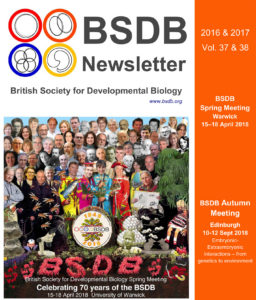
Newsletters are an essential pillar of scientific societies or communities (Kelty, 2012). They reveal a lot about a society’s nature and areas of engagement, and this perspective is now provided for the BSDB reaching back four decades. As shown in Box 1, BSDB newsletter #1 was published in 1979, and we hold an almost complete list of issues since then, with only 3 issues missing from this entire period! Initially, the newsletters were numbered individually up to issue #45 in 2002. From then on, the numbering occurred as single volume per year with summer and autumn editions sub-numbered as 1 and 2; consequently issue #46 was replaced by #23-2, as if newsletters had been numbered by year from start, thus making it possible to calculate the publication year and issue of previous newsletters in retrospect (A. Furley, pers. comm.; footnote in Newsletter #23-2, 2000, p.1). Since 2013, during my time as communications officer, publication has been reduced to only one newsletter per year. This latter change reflects the fact that information is now made available in more timely fashion on the BSDB website and on The Node, so that newsletters have changed into legacy items rather than carriers of urgent news and information (see editorial of Newsletter #37/38, 2016/17).
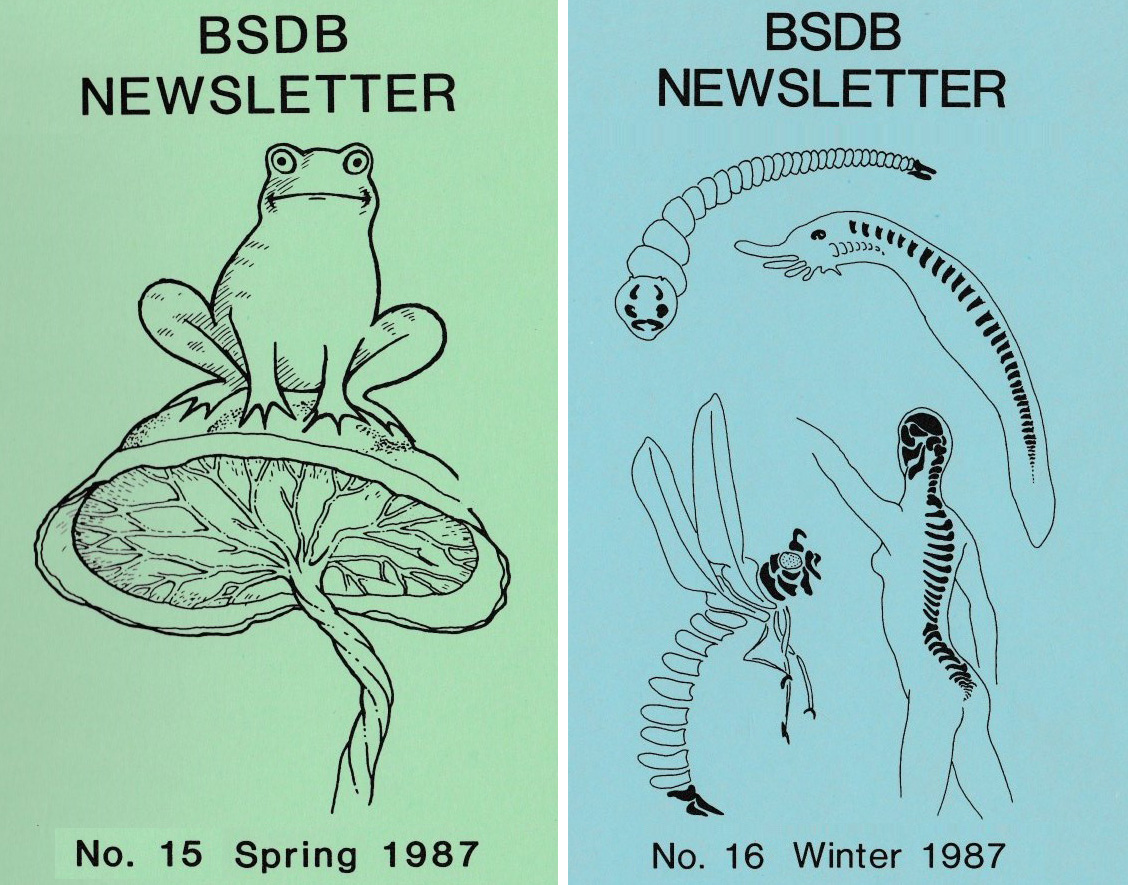
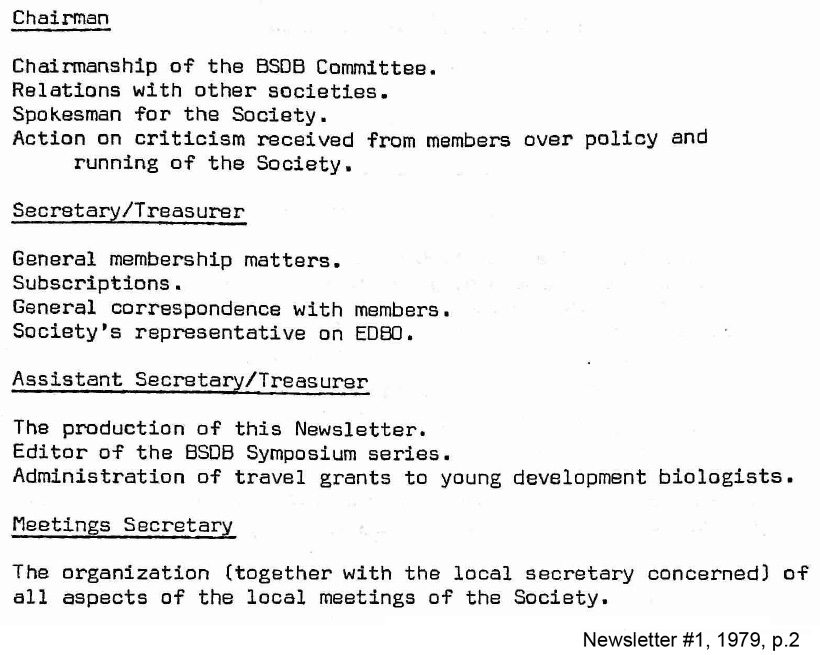
Another obvious trend is the dramatic improvement of editing and printing technology (from type writer to computer, from black-and-white print to colour; Fig. 3), as well as the advent of the internet which becomes obvious during the first two years of the millennium. The first BSDB website address (http://www.ana.ed.ac.uk/BSDB) is mentioned in issue #44 (2000, p.5), which then changed into today’s bsdb.org in issue #23-2 (2002, p.2), followed by several issues alerting people to the fact that the new website exists. To my surprise, I could not find any dedicated article introducing the BSDB website to the community. Shortly after, a website co-ordinator was introduced on the committee (see Appendix), first represented by Kate Storey (2003-4) followed by Andrew Jarman (2004-5), who then became publication secretary and website co-ordinator rolled into one (2005-10); this combined task was thereafter renamed into “communications officer”. After the turn of the millennium, web links were increasingly used in many contexts, paralleled by the disappearance of paper versions of important forms (e.g. to register for conferences, apply for travel grants or submit abstracts – which had often been grouped together in the so called “centre section”). Before the advent of the internet, it made a lot of sense to provide these forms in newsletters because it helped to reduce the burden of postage; as Phil Ingham explained to me of his time as publication officer (1991-95): he needed to get ~700 newsletters printed, stuffed into envelopes and sent out one-by-one.
When browsing through the newsletters, there are obvious phases where the emphasis lies on different forms of contents, likely due to the personal preferences of officers and chairs in charge. For example, there are periods where meeting reports are a regular feature, whereas they are completely absent at other times. Constant elements that feature in almost all newsletters throughout four decades include: (1) meeting announcements (see below for more detail); (2) lists of officers and committee members of the time (see Appendix); (3) obituaries and book reviews – although they gradually vanished during the last years likely due to the advent of The Node as a “modern newsletter” for the wider community of cell and developmental biologists covering much of the more general news (Vicente et al., 2017; see editorial of Newsletter #37/38, 2016/17); (4) reports (or at least mentions) of the winners of society awards, i.e. the Waddington medal since 1998, Beddington medal since 2004, Cheryll Tickle medal and Dennis Summerbell Lecture award since 2016.
To start capitalising on newsletters as a unique source of information, I have linked BSDB medal winners listed on our website to the newsletters which contain the respective reports/mentions of awardees. I feel that this does not only provide evidence for the otherwise anecdotal lists, but it also enriches them with contemporary views about the awardees’ achievements. Furthermore, I extracted a list of officers on the committee (see Appendix), as well as meeting information (see below for more detail); the latter includes existing meeting reports which are now part of the documents listed under “Meeting programs” (Box 1) and provide insightful contemporary views about those events. Obituaries are further valuable documents of the time which should be made accessible; for example I inserted Ed Lewis’ obituary (Newsletter #25/2, 2004, p.8) in a link collection of Drosophila research history articles, or Rosa Beddington’s obituary (Newsletter #43, 2001, p.13) on the BSDB’s Beddington medal page.
But there are many examples of interesting further discoveries that I came across. First of all, the newsletter does not restrict to BSDB-specific information, but it provides a wider insight by reporting community-relevant news of the time, such as new editors of subject-related journals, prizes in the field, conferences of other societies, etc. (i.e. the kind of information that is well covered these days by The Node; Vicente et al., 2017). Some contents touch on topics of political or societal relevance still debated these days. For example, Newletter #23-2 (2002, p.6) mentioned a plenary lecture at the BSCB/BSDB Spring meeting in Warwick in 2003 entitled “Government support for world class science” given by Lord Sainsbury of Turnville (then Government Minister for Science and Innovation); Kate Storey reported on a meeting entitled ‘“Women on Top”, Reflections on Women in Science’ (Newletter #23-2, 2002, p.10); or some pieces reflected on the newly emerging PLoS journals and the wider question of open access (Newsletters #24-1, 2003, p.3 and #27-2, 2006, p.8).
Also relevant in this context are contributions about science communication and advocacy. For example, the article entitled ‘The headless tadpole affair” (Newsletter #36, 1997, p.1) described a misleading press release about the rather forward-looking topic of mammalian organ cultures, and touches on the dangers of interacting with the media (“never get entangled with the media without some training“). Newsletter #41 (2000, p.3) contains a report about the UK Life Sciences Committee (UKLSC), a joint forum for UK bioscience societies aiming to speak “with one voice to the media, the government and the research councils, for the things we need and want”. Paul Martin acted as the BSDB liaison followed by Guy Tear. One of its legacies was the speakers database (www.biology4all.com) which still continues to lead a cryptic life. More importantly, the UKLSC merged into the Bioscience Federation in 2002 (Newsletter #23-2. 2002, p.3f.), which then combined with the Institute of Biology into the (Royal) Society of Biology in 2009 – and the BSDB became a member society in 2016 (Newsletter #36-2, 2015, p.23). In spite of all these efforts to promote biology in society, the above mentioned report in Newsletter #41 about the UKLSC reads rather sobering from today’s perspective: “There is an ongoing programme to aid quality science education in schools and the UKLSC sponsors school level videos on topics like genetic engineering so that in 10 years time we’ll all have PhD students who know significantly more than we do before they even start their bench work!” That the topic of education was taken with great enthusiasm at the time, is also reflected in the creation of education officer posts on the BSDB committee which were held by David Wilkinson (2002-2006) and Corinne Houart (2003-2007) – but these posts were not continued thereafter.
Another highlight of science communication is Ann Lackie’s article “Taking the anoraks out of fiction” (Newsletter #26-1, 2005, p.5), about the need to establish dialogue and collaboration between fiction writers and scientists, later formalised in the SciTalk initiative and website which is still live. Also the various experiments with sci-art fall into this category. Newsletter #42 (2000) shows a glass window termed “Window on Life” with Developmental Biology motifs. It was a collaboration between the MRC Centre for Developmental Neurobiology at Guy’s, Jim Cohen (Kings’ and St. Thomas’ Hospital) and the glass artist Carole Nunes. The window was installed in the north wing link corridor at St Thomas’ (any news of its present existence?). Other examples are the inclusions of sci-art exhibitions at the York Spring Meeting in 2002 (Newsletter #45, 2002, p.2 & back cover; announced in the previous newsletter) and at the Autumn Meeting 2016 in Edinburgh, where chimaera- and embryo-inspired artwork was on display (Newsletter #37/38, 2016/17, p.14). The sci-art exhibition in York prompted Phil Ingham to comment on science in society: “If the public are prepared to put their hands in their pockets to support the arts or sport, why then should they not be persuaded to support science in a similar way?” (Newsletter #23-2, 2002, p.10). Unfortunately, this topic remains as important today as it was then, and this is clearly demonstrated by the current advocacy campaign which was initiated by the BSDB together with the Company of Biologists (Maartens et al., 2018; Prokop, 2018; several articles in Newsletter #37/38, 2016/17).
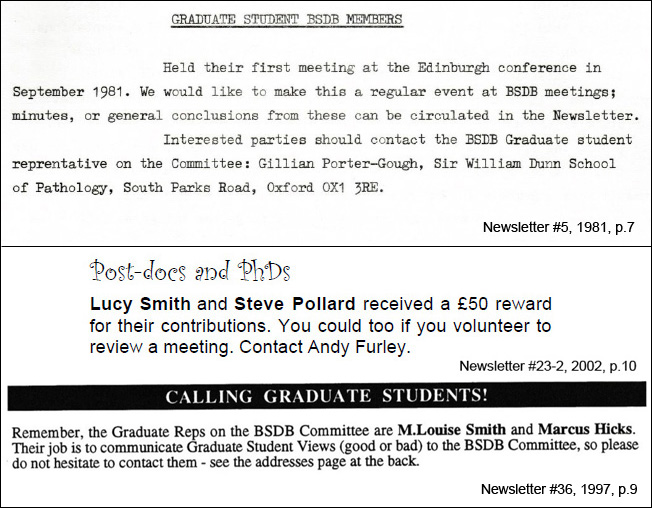
An internal communications issue observed over the decades is the attempt to integrate graduate students into society life (Fig.4). For example, a graduate student meeting at the Edinburgh conference in 1981 is mentioned in Newsletter #5 (1981, p.7), and there was an announcement of a PhD student conference in Autumn 1999 – although I could not spot any traces thereafter confirming that this meeting had taken place or reflecting on its success. Furthermore, there were attempts to animate PhD students to write for the newsletter (Newsletter #23-2, 2002, p.5), which then happened for a short while starting in 2003 (Newsletter #24-1, 2003, p.6). This was further promoted also by an announcement to pay students a £50 reward for writing meeting reports (Newsletter #23-2, 2002, p.10; Fig.4). An important step was taken with the inclusion of student representatives on the committee starting in 1987, joined by a postdoc representative in 2015, which eventually led to the introduction of a separate webpage for young members (Newsletter #37/38, 2016/17, p.35). The importance of uncovering this particular part of the society’s history became clear to me during an engaging conversation I had with our newly elected postgraduate representative, Jessica Forsyth (2018-21); learning the mere fact that she has become part of a thirty year history sparked enormous enthusiasm and the immediate idea to get in contact with former graduate representatives.
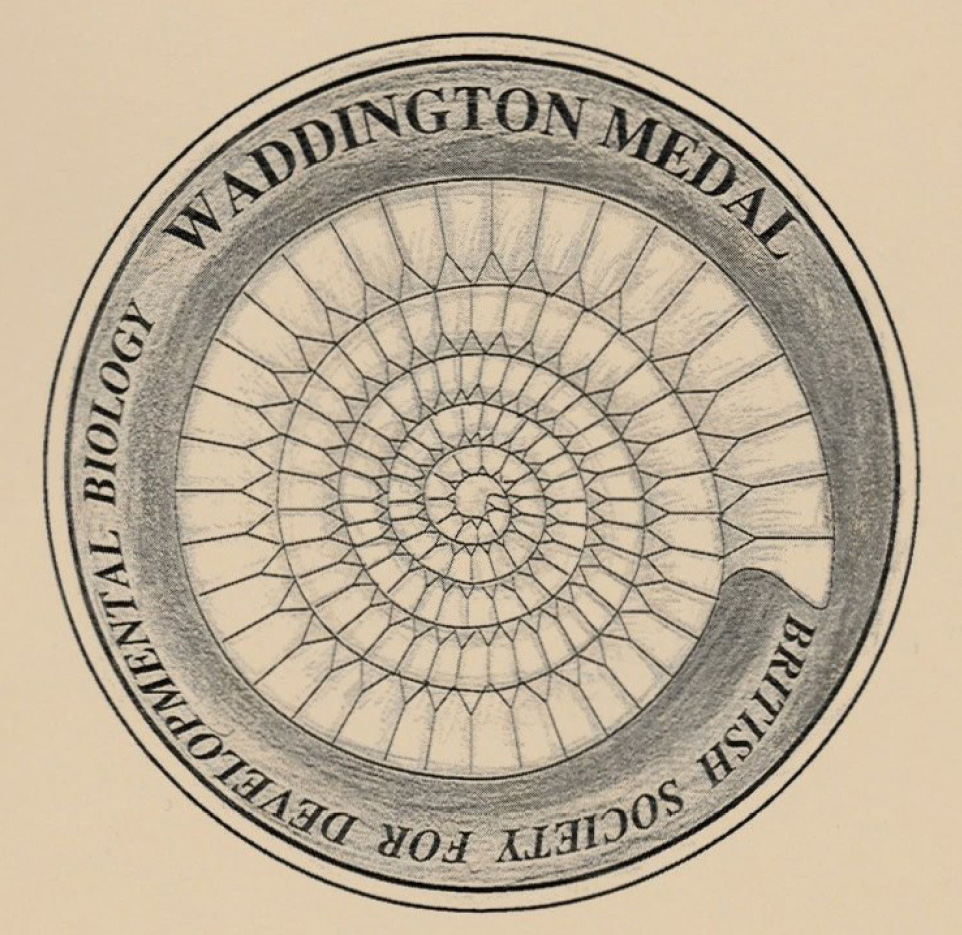
A further interesting read are the articles announcing and explaining the introduction of new society awards and medals, such as the Waddington medal (Newsletter #36, 1997, p.9; Fig.5 – to recognise contributions both to the field and to the Developmental Biology community in the UK), the Beddington medal to honour Rosa Beddington who had tragically died of cancer aged 45 in May 2001 (Newletter #23-2, 2002, p.2 – to recognise the achievements of PhD students), the Gurdon Summer Studentships (Newsletter #35, 2014, p.10 – to allow undergraduates to work in a lab over summer), the Cheryll Tickle medal (Newsletter #36, 2015, p.14 – to recognise achievements of female researches at their mid-stage career), and the Dennis Summerbell Lecture award (Newsletter #37/38, 2016/17, p.47 – to honour good work by postdoctoral rsearchers).
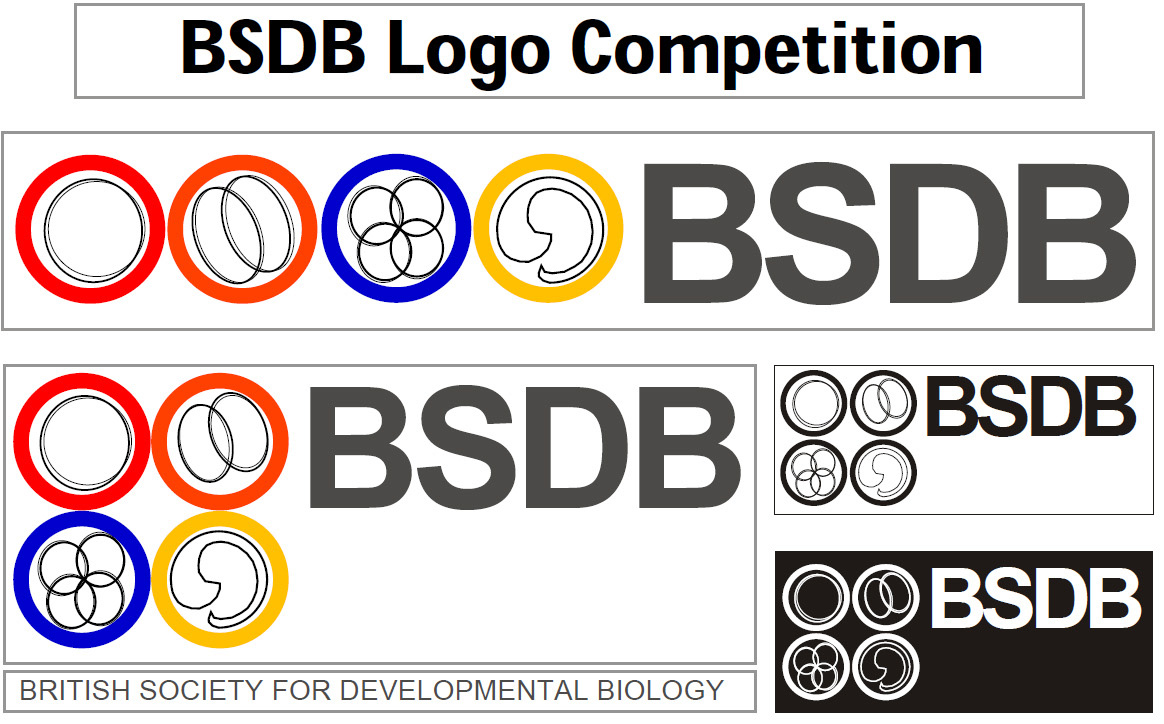
New to me was the origin of the BSDB logo, announced as a competition in 2001 (Newsletter #43, 2001, p.7). Out of 18 submissions, the design by Jeff Christiansen was the clear winner (Newsletter #44, 2001, p.25; Fig.6; logos). As Christiane Ruhrberg’s explained at her Cheryll Tickle medal lecture at the 2018 Spring meeting, she was the first person ever to have seen the logo, since Jeff stayed at her house when he designed it. – and it is little anecdotes like this that bring history to life.
Each time I look at an issue, I stumble across other interesting features, and there will be many other topics and events worth reporting, such as the gradual development of scientific questions, themes and methodologies, the BSDB’s financial history, the development of its close and unique relationship with the Company of Biology, or little anecdotes such as the food poisoning at the York Spring Meeting in 2001 (Newsletter #45, 2002, p.2) which are also part of our society’s history. This said, the newsletters are now publicly available, and new discoveries can be made by anyone taking an interest! But please, be so kind to share your findings!
The BSDB Meeting programs
The current archive contains digitised meeting programs covering most of the meetings, from the inaugural conference of the newly formed SDB in 1964 (meeting #1) through to the present. Where no meeting schedules were encountered (although they may still be hidden somewhere in the materials!), I could retrieve a lot of detailed information from the newsletters covering the period after 1996 (although relevant conference information became less detailed in newsletters after 2002, likely due to the availability of programs online that are now lost). For conferences since 2007, I could often retrieve further information from organisers who still kept relevant files – and it might be a worthwhile effort to write to former conference organisers more systematically to unearth the occasional stock of documents collecting dust on shelves or in filing cabinets.
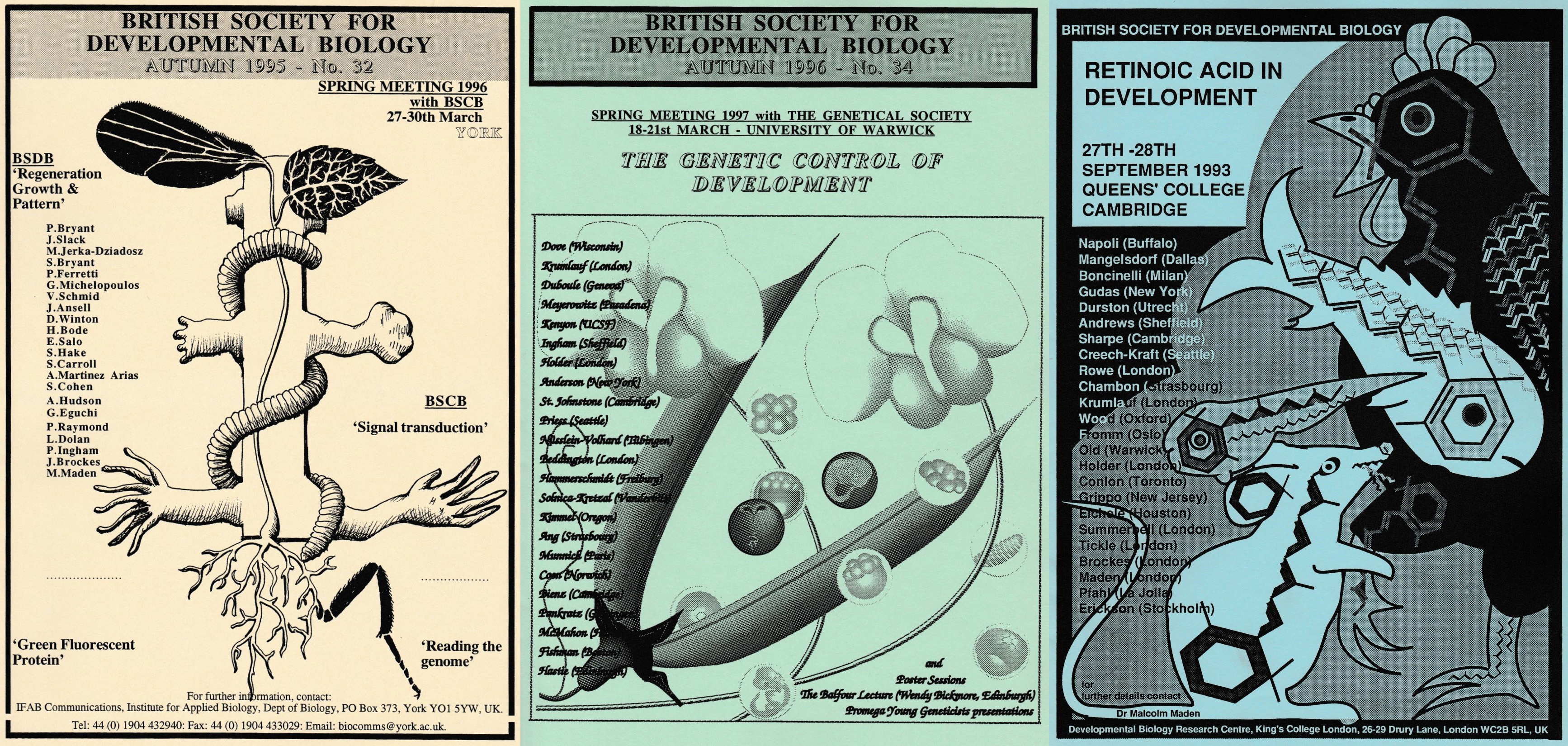
Meetings often start featuring in newsletters about 2-3 years leading up to the conference, and interesting planning developments can be observed during this period. For example, initial announcements of the Spring Meeting 2000 were entitled “Cell death and proliferation” which then refined into “Pattern formation and control of cell number”; or the Spring Meeting of 2002 started off as “Evolution & development” which then turned into “Evolution of developmental mechanisms”. Reconstructing the meeting history from newsletters also led to the addition of insightful meeting reports, and also a number of poster designs resurfaced in this way (Fig.7) – all added to our downloadable meeting documents.
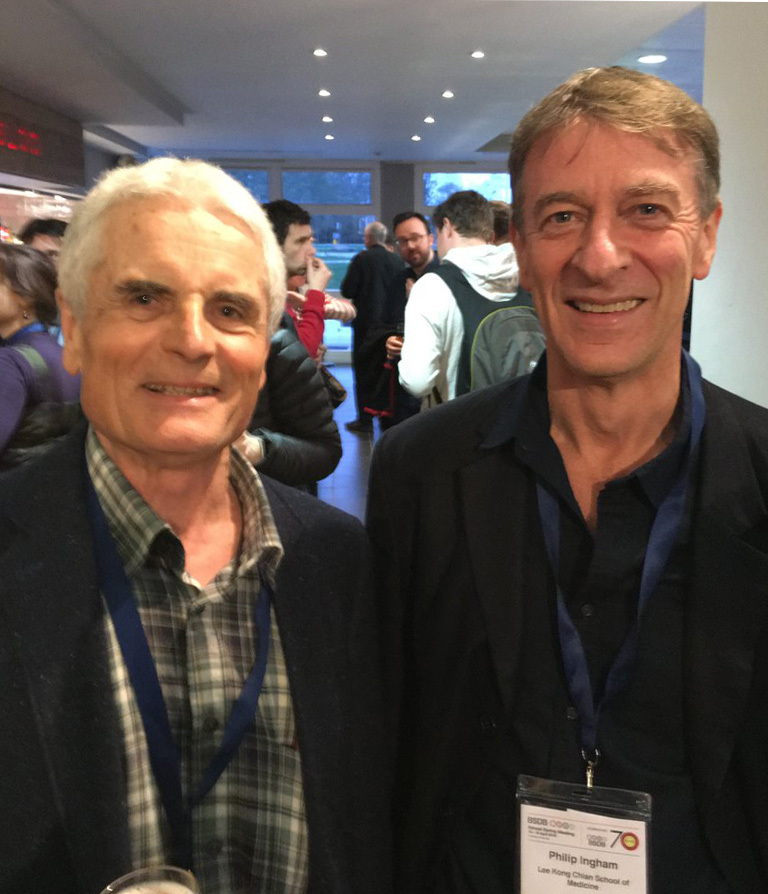
In general, the recovered documents will be an exciting resource for those who attended or organised those meetings, and part of that excitement came across at the 70th anniversary Spring meeting in 2018 (Fig. 8). But the conference documents also provide an important insight into the scientific topics that dominated the field at any given time. They offer an opportunity for young developmental biologists to understand the historical roots of their specific sub-fields – and perhaps the surprising revelation that many questions they address today were already asked long before they got into science. The documents also make transparent which other societies the BSDB collaborated with over the years.
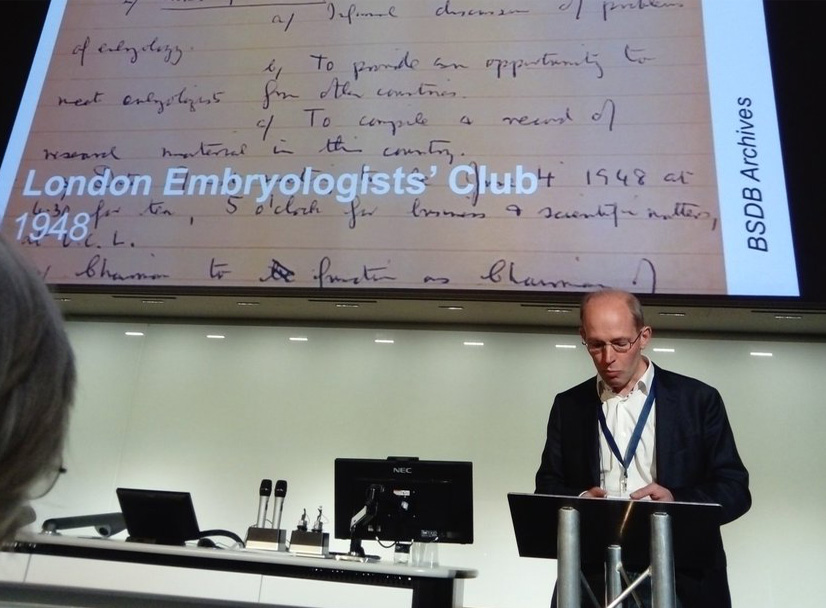
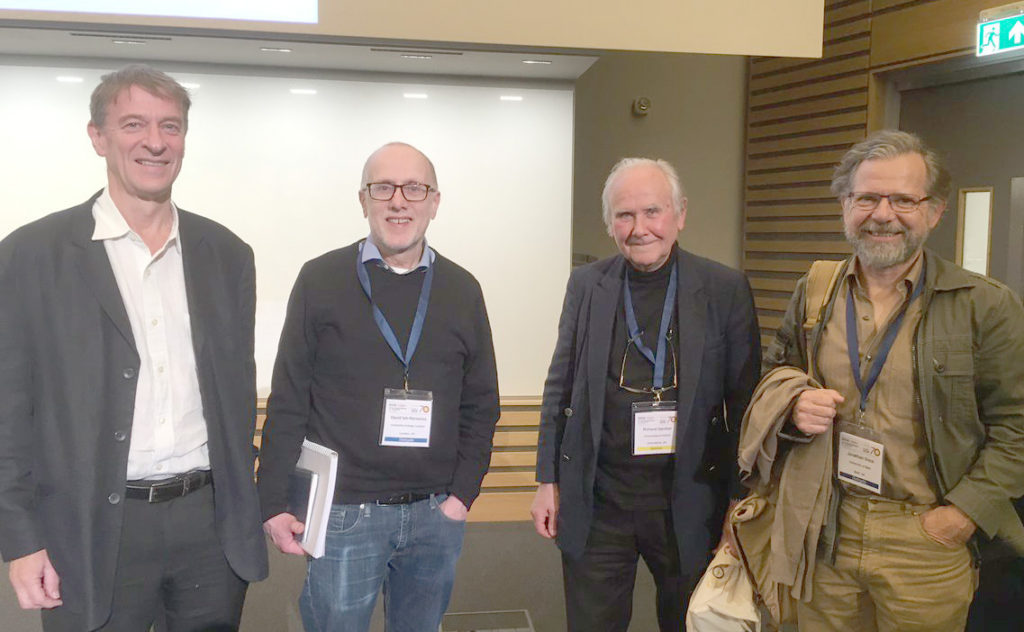
Fig. 9 Nick Hopwood showing an image of the early committee meeting notes during his talk about the history of Developmental Biology at the BSDB Spring meeting 2018
The early meeting notes
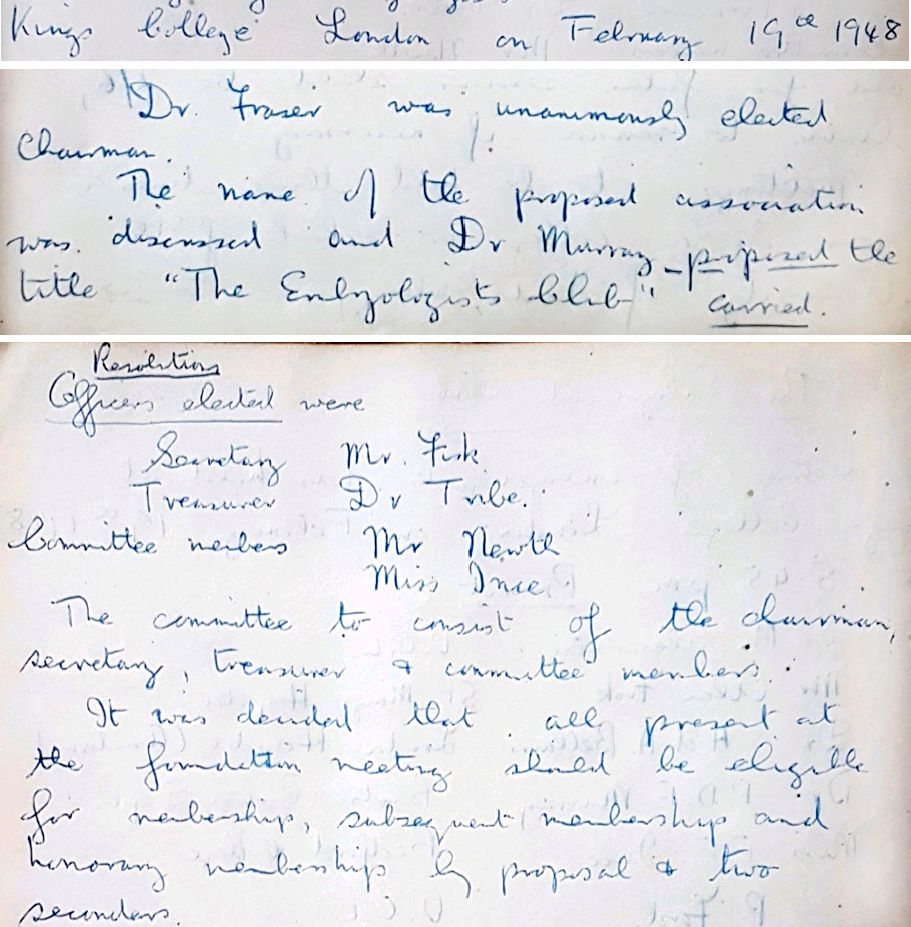
The hand-written meeting notes are the archive documents which are least accessible to a lay person, but might likely be the most interesting ones for historians (Fig.9). The two note books of the “The (London) Embryologists’ Club” digitised so far, cover meeting minutes of the time from its foundation in 1948 to its transition into the SDB in 1964 (Box 1). Book #1 covers mainly committee meetings, and book #2 predominantly scientific symposia and their associated general society meetings. The precise dates for the various minutes tend to be provided at the start of each entry, and meetings are usually signed off with date on the next meeting, providing a complementary means to deduce or confirm dates. Using these materials, Jonathan Slack extracted a brief overview of this period (Slack, 2000), but more work will be required. For example, they will enable us to partly reconstruct the early conference history before 1964 (i.e. the period not covered by current meeting documents; Box 1; archive list), and I already extracted a list of early presidents/chairs, officers (Appendix). Another interesting addition is the little rule book of the newly founded SDB (SDB-1964), to which we added some documents illustrating the transition process and the thoughts leading up to it.
Conclusions, your contributions, final home for the archive
Here I have explained the story behind the digital BSDB Archive and provided my personal view of its contents, relevance and potential applications. The BSDB will likely not go further with the digitisation, but has undertaken different steps to make its contents available. Thus, the Historical Collections of the John Innes Centre (collections.jic.ac.uk) has kindly offered to host and curate the BSDB archive, where it is now available side-by-side with the Genetics Society’s archive – a potential treasure to perform comparative studies into science history.
I hope that the “open source” nature of the BSDB Archive will attract wider interest and inspire others to join in and help develop its full potential – be it biologists browsing around, or (hobby) historians making systematic scientific use of it (Fig.10). As Carsten Timmermann wrote from his perspective as science historian: “Your archive is a little treasure trove and will enable us to understand the history of Developmental Biology in this country much better. I wish other societies would follow your example. If we had a whole set of similar archives at our disposal, this would help us to study the way the life sciences overall have developed, comparing and contrasting sub-disciplines and understanding trends. For example, one could look at conference programmes in different fields within the life sciences and study how molecular methods have transformed biology.”
I would like to finish this blog post by asking your help: if you read or study documents of the archive and gain any new insights, recall anecdotes, have additional background knowledge that complements available information, or realise that you hold any additional documents that might help to fill remaining gaps, please be so kind to contact comms@bsdb.org and let us know – it will be a helpful contribution to the wider understanding of the history of our society and field in general.
————————————————————-
References
British Society of Developmental Biology (BSDB) (1984). European Developmental Biology Congress (abstracts). J Embryol Exp Morphol Suppl. 1, 1-271 – [LINK]
Kelty, C. M. (2012). This is not an article: Model organism newsletters and the question of `open science’. BioSocieties 7, 140-68 – [LINK]
Maartens, A., Prokop, A., Brown, K., Pourquié, O. (2018). Advocating developmental biology. Development 145 — [LINK]
Prokop, A. (2018). What is Developmental Biology – and why is it important? Open Access Govern 17, 121-123 – [LINK]
Slack, J. M. (2000). A short history of the British Society for Developmental Biology. Int J Dev Biol 44, 79-83 — [LINK]
Vicente, C., Maartens, A., Brown, K. (2017). The Node and beyond – using social media in cell and developmental biology. Sem Cell Dev Biol — [LINK]
————————————————————-
Appendix:
BSDB chairs & officers since 1948
This list was extracted from the digitised newsletters, note books and committee/general meeting minutes (Box 1; early officers). The precise years of transition between consecutive officers were not always easy to establish and might need further refinement.
Chairs and presidents
- Paul Martin (chair, 2019-2024)
- Ottoline Leyser (chair, 2014-2019)
- Elizabeth Robertson (chair, 2009-2014)
- Matthew Freeman (chair, 2004-2009)
- Phil Ingham (chair, 1999-2004)
- Jim Smith (chair, 1994-1999)
- Michael Akam (chair, 1989-1994)
- Martin Johnson (chair, 1984-1989)
- Chris Graham (chair, 1979-1984) – president: David R. Newth
- Anne McLaren (1975-1979)
- Michael Abercrombie (1970-75 – thereafter Honorary President)
- David R. Newth (chair 1963-69)
- William J. Hamilton (chair 1951-63)
- John Dixon Boyd (chair, 1950)
- E.A. Fraser (chair; 1948-50)
- James P. Hill (first president; 1948-54)
Secretaries:
- Tristan Rodriguez (2023-2028)
- Megan Davey (2018-23)
- Kim Dale (2013-18)
- Mike Taylor (2008-13)
- Robert Kelsh (2003-08)
- Ivor Mason (1998-2003)
- Jonathan Slack (1993-98)
- Peter Thorogood (1988-93)
- Chris Ford (1984-88)
- Michael Balls (ca. 1978-1983; last 4 years Secretary/Treasurer)
- John McKenzie (1975-ca.78)
- J.C. Campbell (ca.1971-75)
- Frank Billett (1967-ca.71)
- Elizabeth M. Deuchar (1962-67)
- Alan Fisk (1950-62)
Treasurer
- Tom Bennett (2024-2029)
- Cynthia Andoniadou (2019-2024)
- Christopher Thompson (2014-19)
- Andrew Fleming (2009-2014)
- Guy Tear (2004–2009)
- Ottoline Leyser (1999-2004)
- Jonathan Bard (1994-99)
- Liz Jones (1989-94)
- Mary Bownes (1984-1989)
- Michael Balls (ca.1979-84; Secretary/Treasurer)
- J.R. Hinchliffe (ca.75-ca.79)
- J. McKenzie (ca.1970-ca.75)
- Alan Fisk (ca.1965-ca.70)
- E.W. Baxter (1960-ca.65)
- R.J. O’Connor (1950?-59)
- Margaret Tribe (1948-50?)
Programme/Meetings secretary/officer
- Shankar Srinivas (2023-28)
- Sally Lowell (2018-23)
- Joshua Brickman (2013-18)
- James Briscoe (2008-2013)
- Nancy Papalopulu (2003-2008)
- Jamie Davies (1998-2003)
- Ian Jackson (1993-98)
- Rosa Beddington (1991-93)
- Nigel Holder (1985-91)
- Mike Snow (1981-85)
- W.D. Billington (1976-81)
- D.A. Ede (ca.1973-1976)
Publications secretary/Website co-ordinator/Communications officers
- Raman Das (2023-28, communication)
- Ben Steventon (2018-23, communication)
- Andreas Prokop (2013-18, communication)
- Malcolm Logan (2010-13, communication)
- Andrew Jarman (2004-5 web, 2005-10 publications & web)
- Kate Storey (2003-4, web)
- Andy Furley (2000-05)
- Vernon French (1995-2000)
- Phil Ingham (1991-95)
- Jim Smith (1986-91)
- Chris Wylie (1984-86; before assistant secretary/treasurer)
Graduate/Student representative
- Tamina Level (2021-24)
- Jessica Forsyth (2018-21)
- Alexandra Ashcroft (2015-18)
- Magdalena Stasiulewicz (2013-2015)
- Jorge Beira (2011-2013)
- Hayden Selvadurai (2009-2011)
- Gareth Powell (2007-2009)
- Raphaëla Kitson-Pantano (2005-2007)
- Caroline Parkin (2003-2005)
- Leigh Wilson (2001-2003)
- Alison Wilkie (1998-2001)
- Marcus Hicks (1996-98, joint)
- Louise Smith (1996-98, joint)
- — vacant —
- Richard Twyman (1994)
- Emily Gale (1991-94)
- Karen Jacques (1987-91)
Postdoc representative
- Anahi Binaugi-Casas (2021-26)
- Charlotte Sophie Louise Bailey (2018-21)
- Michelle Ware (2015-18)
Education officer
- David Wilkinson (2002-2006)
- Corinne Houart (2003-2007)
 The winner
  Laura Hankins (runner up; Dunn school, Oxford) relates childhood memories of observing newts at the pond with the transplantation experiments performed in newts by Hilde Mangold and Hans Spemann – the experiments that sparked Laura’s interest in Dev Biol. She reminds us of the fact that our science is more than the focus on disease and sustainability, but concerns true biology and the wonders of nature around us. And she alerts our technology-focussed minds to the fact that there is an art and beauty in experimental design whatever method we use. As Laura comments towards the end: “This experiment is inspiring partly due to the minimalism of its approach; it demonstrates that the most influential experiments are designed without unnecessary embellishment.”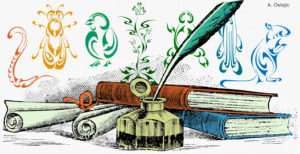
 The
The  Born in 1943,
  Thereafter he held position as Edward Penley Abraham Research Professor of the Royal Society (2003-8), honorary Visiting Professor at the University of York (2007-16), and is now an Associate at the University of Oxford and Emeritus Student of Christ Church, Oxford.
 Emilia started her studies in 2007 at the Sapienza University of Rome and was awarded a B.Sc. in Biological Sciences with highest marks in 2010. She stayed at the same university for her Master’s project which she performed in the laboratory of
 This is my final newsletter as communications officer of the BSDB. I must admit that I enormously enjoyed the task, and can only hope that the changes to our website and the ways in which the society has been represented during my time in office are seen positively by our members. It is my pleasure to announce that Ben Steventon (p.6) has agreed to take over as BSDB communication officer from autumn 2018. I am confident that he will do a brilliant job.