2026 Beddington Medal Winner – Valentina Lorenzi

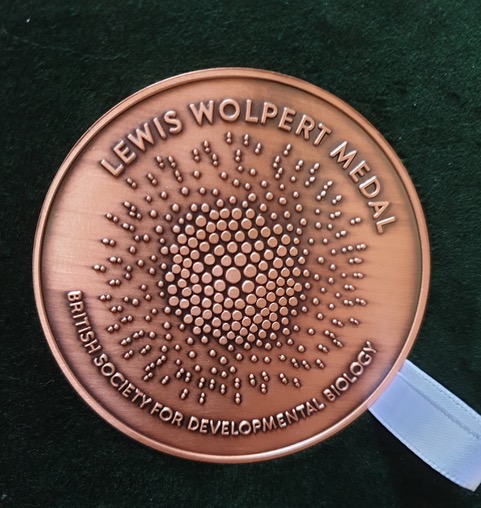
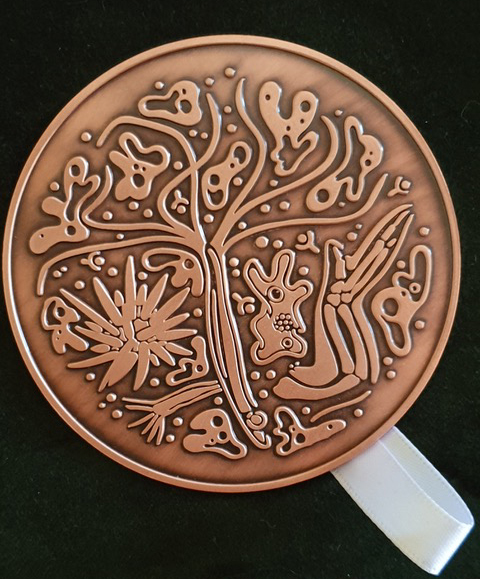
The Beddington Medal is the BSDB’s major commendation to promising young biologists, awarded for the best PhD thesis in Developmental Biology defended in the year previous to the award. Rosa Beddington was one of the greatest talents and inspirational leaders in the field of developmental biology. Rosa made an enormous contribution to the field in general and to the BSDB in particular, so it seemed entirely appropriate that the Society should establish a lasting memorial to her. The design of the medal, mice on a stylised DNA helix, is from artwork by Rosa herself.

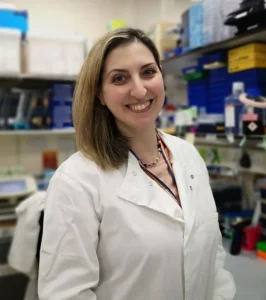
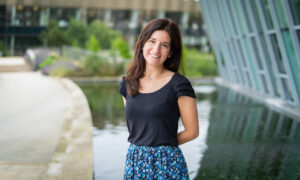
Like many years, it was a tough decision for the BSBD committee to choose a winner for the 2026 Beddington medal. We are pleased to announce that this goes to Valentina Lorenzi, for her PhD work at the Sanger Institute that has resolved previously uncharacterised differentiation trajectories that give rise to sexually dimorphic reproductive organs.


It is a great pleasure to write in strong support of Valentina Lorenzi for the BSDB Beddington Medal. As Valentina’s PhD supervisor at the Wellcome Sanger Institute, I have had the privilege of mentoring her for over five years. During this time, she has distinguished herself as an exceptional early-career scientist, combining intellectual independence, technical innovation, and deep biological insight, and has made contributions that have already had a significant impact across reproductive developmental biology, immunology, and organoid modelling. Given the depth, originality, and impact of her achievements, she stands among the very best young researchers worldwide.

Through two co-first author publications on human gonadal and reproductive tract development, Valentina resolved previously uncharacterised differentiation trajectories that give rise to sexually dimorphic reproductive organs from an initially shared set of embryonic precursor structures. She also identified candidate molecular programmes guiding early fate specification, sex-specific differentiation, and tissue remodelling during gestation. Her work is characterised by a rare ability to integrate core developmental biology principles directly into computational modelling, embedding knowledge from model organisms and general rules of tissue patterning to interpret sparse and heterogeneous human data in the absence of existing reference atlases.

Valentina’s early work in my laboratory, beginning at the Master’s level, focused on human gonadal development and resulted in a co-first author publication.  In this study, she delineated the hierarchical organization of stem and progenitor cells in the gonads, demonstrating that while core cell states are conserved between humans and mice, many defining molecular markers are species-specific. The observation that cell states appear to evolve at a slower pace than gene expression has implications for our understanding of reproductive disorders such as Differences in Sex Development, where diagnostic frameworks are largely derived from mouse genetics. In this context, Valentina’s atlas provides a valuable source of candidate human-specific markers. In addition, she identified previously unrecognised macrophage populations in the human fetal testes, including a TREM2-positive population with a likely yolk-sac origin and immunoregulatory features. This work has been widely adopted by the community (cited nearly 300 times) and has informed the interpretation of genetic studies of differences in sex development.

Building on this foundational work, Valentina undertook an exceptionally ambitious PhD project: to characterise the development of the entire human reproductive tract across prenatal development, at a time when no cell-resolved reference existed for any of these tissues. This required the integration of data from rare and precious human fetal samples spanning multiple organs, developmental stages, and sexes, each with substantial morphological variability. Through a deeply biologically informed computational framework, Valentina successfully combined single-cell transcriptomics, chromatin accessibility profiling, and spatial genomics to generate the first comprehensive, spatially continuous atlas of Müllerian and Wolffian duct, urogenital sinus and genital tubercle development in humans. The resulting paper represents a major conceptual advance in developmental biology. Valentina’s analyses uncovered putative novel regulators of Müllerian duct emergence and regression, and refined our understanding of HOX-based mesenchymal patterning of the Müllerian and Wolffian ducts. Indeed, she showed unexpected thoracic HOX activity in the rostral mesenchyme of the fallopian tubes and epididymis, challenging canonical view of reproductive tract axial regionalisation. Moreover, this work shed light previously unreported heterogeneity within the epithelium of the fetal fallopian tube and epididymis, revealing that

transcriptional domains associated with sperm capacitation and sperm maturation are established much earlier in development than previously assumed. In the case of the fallopian tube, early regional epithelial identity has direct relevance to current models of high-grade serous ovarian cancer, which implicate the fallopian tube fimbrial epithelium as the cell-of-origin. Finally, Valentina predicted the potential effects of drugs and endocrine disruptors on Müllerian and Wolffian duct development in utero, and her predictions were validated using fetal reproductive organoids.

In addition to her first-author work, Valentina has made substantial contributions to a range of collaborative projects within and beyond my laboratory. She has leveraged her work on human gonadal development to support the Surani laboratory in benchmarking in vitro germline models against her single-cell and spatial atlases. Moreover, Valentina has provided computational and analytical expertise to collaborative studies of the human endometrium and in vitro macrophage development where her input has shaped both experimental design and biological interpretation of complex datasets.

During her PhD, Valentina was also selected to attend the Frontiers in Reproduction course at the Marine Biology Laboratory in Woods Hole, USA to complement her computational expertise with hands-on exposure to classical and modern experimental approaches in reproductive biology. This decision reflects her intellectual maturity and her commitment to developing into a fully rounded, independent scientist.

Beyond her exceptional research accomplishments, Valentina is an outstanding communicator. She has presented her work at several international conferences, demonstrating not only her technical expertise but also her remarkable ability to explain complex scientific concepts in a clear, engaging, and accessible manner. Her presentations are consistently well-received, showcasing her talent for delivering clear, compelling and impactful scientific narratives.

Valentina’s dedication to translating research into real-world impact is equally remarkable. As former president of the Cambridge Femtech Society, she has demonstrated visionary leadership in fostering a community of students and alumni committed to advancing women’s health through technology. Moreover, in her last year of PhD training, Valentina founded and led the creation of the illustrated gynaecological health awareness zine Pelvic Matters (https://ventolab.org/pelvicmatters-outreach/). Pelvic Matters has been distributed across institutes in Cambridge to improve health literacy and reduce stigma. Her initiatives in this space exemplify her drive to ensure that her research benefits society at large.

On a personal level, Valentina is a highly valued member of our team. Her kindness, reliability, and collaborative spirit make her a pleasure to work with, fostering a positive and productive environment. Her enthusiasm and strong interpersonal skills foster harmonious collaborations, further amplifying the impact of her technical expertise.

In summary, Valentina’s doctoral work represents a rare combination of conceptual originality, technical innovation, and biological insight. Her research has already reshaped our understanding of human reproductive tract development, and I am confident that she will continue to make field-defining contributions in the years to come and is therefore an exceptional candidate for the BSDB Beddington Medal.

Roser Vento-Tormo

Professor Sir John Gurdon FRS October 2nd 1933 – October 7th 2025

John Gurdon was an extraordinary man who had an immense impact on the whole field of Developmental Biology. He pioneered the concept that cell differentiation occurs by selective gene expression and not by irreversible loss of genetic information, a milestone in biology which he achieved by transplanting nuclei from embryonic cells, or specialised cells, into eggs whose nucleus he had destroyed. By-products of this work were animal cloning and Dolly the sheep. He also showed that the proportion of pluripotent cells decreases during development, but that some persist, providing early evidence of adult stem cells. He shared the Nobel Prize for Physiology or Medicine with Shinya Yamanaka in 2012.

John was an influential mentor to me. I first met him in 1964, when a demonstrator in a first-year practical class insisted that I should take my two-headed tadpole to his lab to show him. I was innocently unaware that John had retreated to his lab to evade dissatisfied students as he was sure the grafting experiment wouldn’t work. Fortunately, John remembered that first encounter two years later when I applied to become his graduate student. He remained a close colleague for over a third of a century and a good friend until he died, five days after his 92nd birthday.

John’s introduction to biology at Eton was notoriously unsuccessful. Not only was he ranked last in biology out of 250 pupils, but his biology teacher wrote: “He will not listen, but will insist on doing his work in his own way.” To his credit, this teacher inadvertently recognized one of John’s greatest strengths, an unswerving determination to pursue his own goals single mindedly, against all odds. The same school report added: “I believe he has ideas of becoming a scientist; on his present showing this is quite ridiculous.” Fortunately, after he gained First Class Honours in Zoology at Oxford, a Lecturer in Developmental Biology, Michail Fischberg disagreed and invited him to try transplanting nuclei in the frog Xenopus, building on a method for Rana recently published by Briggs and King and adapted by Fischberg and Tom Elsdale.

John’s efforts as a graduate student in Oxford resulted in two Nature papers that supported the concept that cell differentiation can occur without irreversible loss of genetic information. This concept is so firmly established now that it is difficult to remember that it continued to attract opposition until the late 1970s.  In the course of this work, John pioneered the method of serial nuclear transplantation, which produced clones of genetically identical animals. The use of this concept, first in science fiction and now in agriculture has made it feel familiar, though at the time it was entirely novel.  John invented animal cloning.

Using serial nuclear transfers, John showed that nuclei from visibly differentiated intestinal epithelium cells from swimming tadpoles could support the development of fertile adult frogs. This same approach also demonstrated that the proportion of nuclei that were pluripotent after transplantation decreased during embryonic development.  As a graduate student, I attempted to extend nuclear transfers to nuclei from adult donor cells, instead of embryonic donors.  Together, John and I demonstrated that nuclei from a range of adult cells including lung, kidney, heart and skin could programme enucleated eggs to develop as far as the feeding tadpole stage. To test adult skin cells, we cultured skin explants and saw outgrowths of undifferentiated cells that then synthesized immunoreactive keratin. Nuclei from these keratinizing cells supported development as efficiently as other adult cells, emphasising that differentiation could occur without irreversible loss of genes. It also demonstrated that at least some of the cells in a differentiated adult tissue were highly pluripotent.  Nowadays we would refer to them as adult stem cells.

John’s momentous scientific discoveries go much further.  By transplanting nuclei into foreign cytoplasm he showed that cytoplasmic factors drive the cell cycle and gene expression.  He demonstrated the existence of a cytoplasmic factor that induces mitosis, later called MPF, and another that induces DNA synthesis. Both were shown by others to consist of cyclins and cyclin dependent kinases, but it was John who discovered their existence.  He also demonstrated that the cytoplasm determines patterns of gene activity of transplanted nuclei and simultaneously that targeting of proteins to the nucleus from the cytoplasm is specified by information in the mature structure of the proteins.

As John Gurdon’s career progressed he used molecular techniques to understand development and differentiation. He microinjected purified macromolecules into Xenopus eggs to demonstrate and analyse DNA replication, transcription of cloned DNA into RNA and mRNA translation into protein. This allowed others to exploit these systems to isolate the genes encoding, for example, interferon as well as neurotransmitters and their receptors.

More recently John turned his attention to analyse mechanisms of cell interaction and intercellular signaling during development. This led him to discover a community effect, which defines the demarcation between cell populations and establishes uniformity within them.  He showed it was mediated by threshold responses to signal factor concentrations and that a single embryonic cell can follow several different cell fates depending on the concentration of a single identified signal factor. He also elucidated mechanisms by which cells perceive their position in a concentration gradient of signaling factors and respond accordingly. Later John’s work came full circle as he elucidated the chromatin changes that accompany and mediate the reprogramming of transplanted nuclei.

Taken together John Gurdon’s contributions amount to an extraordinary body of major discoveries in cell biology and development. His achievements were recognized in many ways.  He gave three of The Royal Society’s named lectures and received their two most prestigious medals, the Royal Medal and the Copley Medal.  He was Knighted in 1995 and he received honours from many countries including Belgium, France, Germany, Israel, Italy, Sweden, Switzerland, Japan and the USA.  He received Honorary Degrees from both Oxford and Cambridge amongst many others. He also had the rare distinction of having a major institute named after him during his working life-time. The Wellcome Trust, Cancer Research UK, Gurdon Institute was founded by John together with Sir Martin Evans, Chris Wylie, Janet Heasman, Michael Akam and myself, joined soon after by Azim Surani and Dame Anne McLaren.

Although he disliked University administration, John served on many national and international committees and boards. For example, he was President of the International Society for Developmental Biology and he chaired the Company of Biologists for 10 years. Surprisingly, he became Master of Magdalene College Cambridge, where his wife Jean rose brilliantly to the challenges that college life imposed.

Sketch, courtesy of Virginia E. Papaioannou

A second sphere in which John Gurdon excelled was his exceptional standard of undergraduate teaching. In the light of all this, you may have an image of a highly focused and perhaps rather one-dimensional individual. Nothing could be further from the truth. In addition to world leading cell and developmental biology, John Gurdon found time to represent Oxford University  at squash and to be a Junior British Squash Doubles Champion, to represent Oxford University at skiing, to drive very fast cars, to become an expert on butterflies and moths, alpine botany and desert botany and to give the rest of his colleagues glimpses of infuriating abilities in all sorts of other areas including tennis, croquet, skating and mountaineering.  Working closely with John for a third of a century had one serious disadvantage.  John was eleven years older than me, but a woman giving directions for finding a room at an institute retreat pointed to John and told me to follow that young man over there.

Ron Laskey and John Gurdon, courtesy of John’s daughter, Aurea

John had a mischievous sense of humour and it would be possible to list many more things about him, such as his single-handed support of McVitie’s biscuit sales, especially when travelling to countries whose food he disliked, – notably France! This led to his remarkable discovery that excess consumption of McVitie’s biscuits is the secret to hair retention; I should have started eating them decades ago.  Instead I shall conclude by adding my amazement at John’s powers of endurance in tolerating one close colleague for a third of a century and even managing to maintain a harmonious relationship while he was my Chairman and simultaneously, I was his Director, a tangle which many would find difficult to unravel, but with John the positives always outweighed the negatives. I and many others will remain deeply grateful to John and I am sure that his impact will endure, not just in his discoveries, but also in the work of his many protégés, of whom I am grateful to be one.

Ron Laskey

Emeritus Charles Darwin Professor of Animal Embryology

University of Cambridge

Join Us for the 2026 BSDB Meeting

BSDB Spring Meeting: Molecules to Morphogenesis

Registration Now Open

  • Dates: 23rd -26th March 2026
    Primary location: University of Warwick, Coventry, UK
    Organisers: Anahi Binagui-Casas, Vicki Metzis, Marysia Placzek, Shankar Srinivas, David Turner


The British Society for Developmental Biology is pleased to announce their spring meeting on:

“Molecules to Morphogenesis”

We are excited to announce that the 2026 BSDB Spring Meeting will take place on the 23rd – 26th of March 2026 at the University of Warwick. Please register here!

This year’s meeting features an exciting lineup of speakers and there will be plenty of slots for talks selected from abstracts.

BSDB is also offering generous BSDB Conference Grants to attend this meeting, which will cover the early-bird registration fee, plus £300 towards accommodation and travel. These are available for scientists of all career stages. Please apply here.

This conference provides the chance to network and socialise with a wide cross-section of the Developmental Biology community. We hope you can join us in March 2026 and we look forward to welcoming you!

Thanks to all who joined us at:

Biologists @ 100 

24th-27th March 2025

 Celebrating 100 years of The Company of Biologists: Perspectives from two PhD students

We are extremely grateful to the BSDB for giving us the opportunity to attend the Biologists @ 100 conference in Liverpool. As PhD students investigating spinal cord injury and regeneration, this experience was invaluable. It allowed us to connect with scientists, gain insights into diverse fields and explore potential collaborations.

Simran Singh

 The meeting started off with an exciting early career research session, offering a unique chance to interact with individuals who have pursued various scientific career paths. A highlight for me was the keynote talk by Dr. Richard Server, co-founder of bioRxiv and medRxiv. He shared his career trajectory, discussed the impact of bioRxiv on publishing – especially during the Covid-19 pandemic –and highlighted the numerous transferable skills gained from an academic career.

The following three days were filled with inspiring and thought-provoking scientific talks. One of the first talks was by Professor Muzlifah Haniffa, recipient of the Cheryll Tickle Medal. She described herself as “born into immunology, married into developmental biology, and became best friends with single-cell omics”. Her research focuses on decoding the human immune system, particularly the spatial and temporal composition of immune cells and their roles beyond immunology, such as in development. Additionally, her work on the Human Developmental Cell Atlas, integrating developmental disorders, has had a profound translational impact. Throughout her talk, she emphasised the importance of interdisciplinary approaches and collaboration in science. She is also a strong advocate for women in STEM and leadership. I particularly liked her powerful statement “Women should continue to thrive in science not despite but because of the system”.

Image: Fantastic end to day 1 of the conference with the welcome reception at Museum of Liverpool

Another talk I enjoyed was by Professor Helen Skaer, winner of the BSDB Waddington Award for her outstanding research, contributions to the developmental biology community and excellent mentorship. Her research explores how cells work together to make an organ of the right shape, size and in the right place, with a focus on renal tubules in fruit flies, which are highly consistent. She eloquently described her research journey from studying Mercierella Enigmatica (reef building tubeworms) to fruit flies and shared some of her “most exciting moments” in the lab. One such moment was the identification of a ‘tip cell’, the master regulator that when ablated would arrest cell division of the renal tubules. My favourite part was due to the lack of a laser ablation machine, Professor Helen Skaer had to come up with a creative solution to manually “suck up” the tip cell. It reminded me theimportance of being creative in research and not being afraid to think outside the box.

Image: Winner of the BSDB Waddington Award (Professor Helen Skaer)

Overall, I had a great time at the Biologists@100 conference. It was a fantastic opportunity to hear talks from scientists across the world. I am now ready to go back into the lab feeling more inspired than ever!

Renato Duarte Dos Santos

Spreading science for 100 years, The Company of Biologists and BSDB have delivered an amazing event full of opportunities to learn more about the current work in developmental biology, but also in environmental awareness and career pathing in biology. This year, the developmental biology showcase at the conference had a clear focus on the role of signal patterning and mechanical signaling, which has been shown to affect multiple processes that we tend to view as solely based on biochemical reactions.

I had a special interest in the work done by Dr. Muzlifah Haniffa, awarded the BSDB Tickle Medal for her involvement in the Human Development  Cell Atlas, a project aiming to incorporate single-omics from all human cells that intervene in human development. I believe this tool will become intemporal for the world of science, with applications for all the multitude of biomedical-related fields.

Another work that caught my eye was the development of a new barcoding method and bioinformatic processing capable of improving the output of single-cell expression analysis, increasing the sampling and reducing substantially the price in comparison with the current market offer (Maizels et al., 2024). This amazing work has been done by Dr. Rory Maizels while as a PhD student. His brilliance and achievements have led him to be awarded the well-deserved BSDB PhD student Beddington Medal. Another approach that I found very interesting was the use of the cell shape to determine the cell type and cell fate, like a pseudo-time analysis (Pönisch et al., 2024 preprint). This innovative work was made by Ewa Paluch from the University of Cambridge.

Besides development talks, there were also some morning plenary talks about climate change and biodiversity loss to help spread awareness about this urgent global matter that hasn’t been handled so far as it should.

Image: Jane Francis talk – British Antarctic Survey                                                   

Image: Lunch, posters and exhibition

I also found the early-career researcher career session quite insightful. It helped me and most likely many to gain a realistic view of the current scientific paradigm and the many options we biologists possess in terms of profession. The chance to have a one-to-one talk with a professional of each career path was for sure one of the most useful experiences. I also have to mention the gala dinner, which was of the highest luxury in a mouth-dropping location, the St George’s Hall. Overall, the conference was amazing, full of great talks, opportunities to network with high-tier researchers, and to enjoy the scientific community at its best.

Images: ACC Liverpool

2025 WADDINGTON MEDAL WINNER: HELEN SKAER

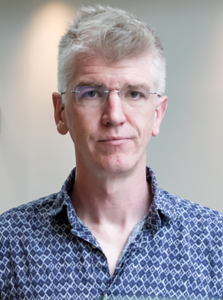
We are very pleased to announce that this year’s Waddington medal winner is Helen Skaer. Her fundamental discoveries have helped shape our understanding of organogenesis, and her impressive range of teaching and outreach activities have inspired countless others.

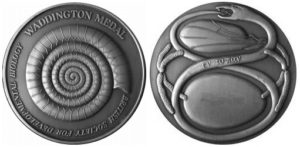
The Waddington Medal is the only national award in Developmental Biology. It honours outstanding research performance as well as services to the subject community. This year’s medal was awarded at the Biologists @ 100 conference at Liverpool, where the recipient presented the Waddington Medal Lecture.


It is a huge pleasure to nominate Professor Helen Skaer for the BSDB Waddington medal. She is a tireless advocate for our community, and has been teaching, inspiring and supporting developmental biologists for over 50 years. Throughout her career, Helen has been fascinated with understanding how cells are organised/organise themselves to produce physiologically functional organs. Her work unravelling the coordination between diverse cellular behaviours such as cell division, specification, differentiation and migration during morphogenesis has made major contributions to our understanding of organogenesis. Given her outstanding research, inspirational teaching, and her wide regard in the community, we believe she embodies the values the Waddington Medal aims to promote. We are confident that she will give a phenomenal Waddington lecture, that will serve to inspire the whole community.

Helen was one of the very first developmental biologists to tackle the relationship between form and function. During her PhD, Helen focused on understanding how excitable cells are resilient to environmental fluctuations in osmotic and ionic potential, giving her a grounding in cellular physiology. She then moved her focus to epithelial tissues – initially probing the relationship between their structure and their specific physiological attributes. During this phase of her work, she demonstrated that in invertebrates, which lack tight junctions, septate junctions can restrict paracellular flow and so contribute to epithelial tightness. She also pioneered technical developments in the low temperature preservation of material for freeze-fracture, leading to the vitrification of biological samples for electron microscopy.

Through this work, Helen became interested in the cellular activities that underlie the development of epithelial tissues; she set out to understand how intrinsic patterns of gene expression integrate with external signals to define specific cell behaviours. She decided to use the Malpighian (renal) tubules of Drosophila as a model tissue – realising that this system would enable her to combine cellular, genetic and molecular approaches with definable physiological readouts. This choice proved inspired: over the years she has dissected out the distinct cellular and molecular behaviours underlying the development of an epithelial tissue into a physiologically functional organ – pioneering ‘multi-scale’ developmental cell biology long before it became trendy!

Helen’s innovation and determination shine through in both her research and teaching successes. A standout example is from the late 80’s, when Helen demonstrated that the large cells at the tip of the developing renal tubules are mitogenically active, by dissecting open Drosophila embryos and ablating these single cells manually. As students, we loved to hear about Helen ablating renal tubule tip cells by sucking them up finely pulled capillary tubes – it inspired us to think outside the box and believe that anything was possible if you put your mind to it. Using genetic approaches, she then demonstrated that these cells are selected in the tubules by a combination of intrinsic factors and intercellular signalling; through the activity of the proneural transcription factors, whose patterns of expression are regulated by Wnt signalling and by Delta/Notch-mediated lateral inhibition. This was one of the early demonstrations that specific cell lineages outside the nervous system are specified by the refinement of proneural gene expression by lateral inhibition.

Over the years, the work of Helen and her lab has shed light on the regulation of features common to the architecture and function of all epithelia. Many of their findings have contributed to our understanding of vertebrate organogenesis, through their demonstration of conservation in regulatory pathways and networks, in their roles during nephrogenesis and more broadly in the development of tubular epithelia.

Helen has always combined research with an impressive range of teaching and outreach activities. Teaching undergraduate courses in Cambridge, Oxford and Sheffield continuously since 1968, Helen designed and ran courses in developmental biology at all three institutions, including the first interdepartmental course in Oxford across the Biological Sciences/Medicine departments. She has trained over 50 summer vacation and final year students in her lab, many of whom have gone on to do PhDs and some of whom are now University academics teaching developmental/cell biology themselves (e.g. Tanya Whitfield, Keith Brennan, Peter Baumann). Finally, Helen plays a key role in promoting developmental biology in India, giving many talks to college students, and participating in both formal and informal collaborations in the NCBS in Bangalore. She has been a panel member for the India Alliance since its inception – a collaboration between the WT and Indian Department of Biotechnology, supporting and advising scientists across the community.

  • Nicolas Tapon
  • Kyra Campbell
  • Tanya Whitfield
  • David Strutt
  • Marysia Placzek

5 Key papers

  1. Skaer, H. (1989) Cell division in the development of the Malpighian tubules of Drosophila melanogaster is regulated by single, specialised cells. Nature 342, 566-569. https://doi.org/10.1038/342566a0
  2. Denholm, B., Sudarsan, V., Pasalodos Sanchez, S., Artero, R., Lawrence, P, Maddrell, S., Baylies, M. and Skaer, H. (2003) Dual origin of the renal tubules in Drosophila: mesodermal cells integrate and polarise to establish secretory function. Curr. Biol. 13: 1052-1057. https://doi.org/10.1016/S0960-9822(03)00375-0
  3. Weavers, H., Prieto-Sánchez, S., Grawe, F., Garcia-López, A., Artero, R., Wilsch-Braeuninger, M., Ruiz-Gómez, M., Skaer, H.*, & Denholm, B. (2009) The insect nephrocyte is a podocyte-like cell with a filtration slit diaphragm. Nature 457:322-326. *corresponding author https://doi.org/10.1038/nature07526
  4. Bunt, S., Hooley, C., Hu, N., Scahill, C., Weavers, H. and Skaer, H. (2010) Haemocyte-secreted Type IV Collagen enhances BMP signalling to guide renal tubule morphogenesis in Drosophila. Developmental Cell 19: 296-306. https://doi.org/10.1016/j.devcel.2010.07.019
  5. Weavers, H. & Skaer, H. (2013) Tip cells act as dynamic cellular anchors in the morphogenesis of looped renal tubules in Drosophila. Developmental Cell 27: 331–344. http://dx.doi.org/10.1016/j.devcel.2013.09.020