All posts by comms

Cancer Research UK’s new investment in paediatric cancer research

At this year’s Spring meeting, we had Sheona Scales from Cancer Research UK come to discuss with meeting attendees about their funding schemes. They have recently got in touch with us to follow up on the feedback they received. 

It has been a couple of months since Cancer Research UK attended the BSDB spring meeting. I would like to say thank you to you for your input and suggestions at the meeting, it has been vital in shaping our work.
I’m delighted to let you know that we’re increasing our investment in paediatric cancer research to drive progress in this field, by launching two new significant funding calls. We would like to invite applications from researchers from all disciplines, including developmental biology, to apply their knowledge and expertise to paediatric cancers:
Children and Young People’s Innovation Cancer Awards
We’re looking for innovative approaches that will transform our understanding of paediatric tumour biology and develop new ways to treat, detect and prevent paediatric cancer.
Areas of focus may include the basis of tumour initiation and progression, discovery of novel biomarkers, and development of more effective and less toxic therapies to improve quality of life.  
Eligibility: Any discipline, from early career to established researcher.
Funding up to £1m for up to 3 years
Expression of interest deadline: 6 December 2019
 
Apply here
 
Stand Up To Cancer-Cancer Research UK Paediatric New Discoveries Challenge 
Together with Stand Up To Cancer, we’re welcoming applications from multi-disciplinary, multi-institutional, trans-Atlantic teams that want to pursue a step change in understanding the drivers of paediatric cancers and develop novel or repurposed medicines, treatment strategies or technologies. 
With a clear line of sight to the clinic, these projects will have the potential to significantly impact paediatric cancer patients, including teenagers and young adults. Further funding will be available to support translational or clinical studies for  the most promising research.
Eligibility: teams must be led by at least one researcher from a US institution and one from a UK institution. 
Funding up to £1m for 2 years
Expression of interest deadline: 6 December 2019
 
Apply here
BSDB Travel grants are available for BSDB members to cover registration and accommodation costs for the European Developmental Biology Congress to be held in Alicante, Spain 23-26 October 2019.
In addition, as the EDBC meeting is classed as a BSDB-sponsored meeting and BSDB members can register at ‘member’ rates.

DEADLINE FOR BSDB TRAVEL GRANTS FOR THIS MEETING IS 27th May

Please follow this link to make your application: https://bsdb.org/membership/. 
Instructions for awardees:
If you have been awarded a BSDB conference grant please complete registration through the online system and select the payment option “bank transfer”.
Once you have completed registration you should send an email to  congress@aopc.es  informing that you been awarded with a BSBD Grant. BSDB will then transfer funds directly to the meeting organisers.

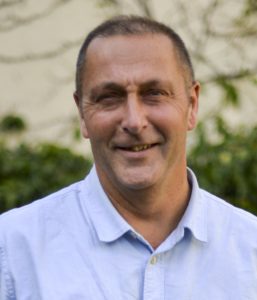
Bénédicte Sanson – Winner of the 2019 Cheryll Tickle Medal.

In 2016, the BSDB introduced the Cheryll Tickle Medal, which is being awarded annually to a mid-career, female scientist for her outstanding achievements in the field of Developmental Biology.

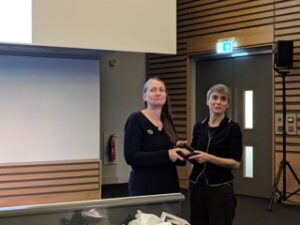
The BSDB is proud to announce the 2019 awardee Bénédicte Sanson. Due to family commitments, Bénédicte was unable to be at the Spring meeting this year to receive the medal in person, but look out for her interview that will soon appear on the Node. 

After a PhD in Paris on the molecular mechanisms of mRNA processing in phage, Bénédicte Sanson switched to Drosophila developmental genetics for a postdoc in Cambridge at the MRC-LMB. During her four-year postdoc with Jean-Paul Vincent (1994-1998), she investigated key aspects of Wingless signalling (the homologue of vertebrate Wnt-1) in development.  Through this work, she became aware that the mechanisms underlying cell sorting at compartmental boundaries remained elusive.  This fostered a long-standing interest in morphogenesis, which became the focus of her independent research group when awarded a Wellcome Trust Career Development Award in 1998, hosted in the Department of Genetics, Cambridge. Since then, Bénédicte has built up an internationally recognized research group, obtaining a Lectureship in 2009, then a Readership in 2018, in the Department of Physiology, Development and Neuroscience. In 2011 and then in 2017, she was awarded a Wellcome Trust Investigator Award to work on the mechanisms of cell sorting and collective cell movement in vivo.

Bénédicte has made key contributions to the field of developmental signaling, including demonstrating that the adhesion and signaling activities of Armadillo (the homologue of vertebrate Beta-catenin) are separable (Sanson et al., 1996) and elucidating novel signaling regulations at the parasegmental organizer in Drosophila embryos (Desbordes and Sanson, 2003; Sanson, 2001; Sanson et al., 1999). More recently, the work of her group has focused on understanding the fundamental processes driving tissue morphogenesis during development. Their work on tissue-scale forces showed that an extrinsic axial force extends the main body axis in Drosophila embryos, acting in parallel to actomyosin-dependent polarized cell intercalations (Butler et al., 2009). Next, they identified the source of this extrinsic force as caused by the invagination of the endoderm at the posterior of the embryo (Lye et al., 2015). Their work on cell sorting demonstrated that actomyosin-based mechanical “barriers” stop cells from invading adjacent compartments, pioneering CALI on GFP in Drosophila embryos to inactivate Myosin II subcellularly (Monier et al., 2010). They further showed that actomyosin-based barriers also order cells during axis extension (Tetley et al., 2016). Recently, the work of her group has shed light onto how actomyosin-driven tension can orientate cell divisions at compartmental boundaries (Scarpa et al., 2018). They also investigated how epithelial folding and actomyosin-enrichment are coupled downstream of Wingless signaling at boundaries (Urbano et al., 2018).

Underlying all of this work is a clear understanding that morphogenesis is dependent on both genetic and physical inputs. As a consequence, Bénédicte’s group often pioneers new methodologies to follow developmental processes quantitatively, and at multiple scales. Their approaches include computational methods to automatically track cell behaviours in real time, for thousands of cells; light sheet imaging (SPIM) to analyse morphogenetic events at the scale of the whole embryo; and laser cuts to probe and manipulate tissue tension. By combining such imaging and computational techniques, the lab continues to investigate how cell intrinsic and extrinsic forces integrate to shape developing tissues. Recently, Bénédicte’s group started developing computational models in collaboration with physicists and mathematicians, to explore the more mechanical aspects of morphogenesis.

In addition to her research contributions, Bénédicte has taught in a range of molecular and developmental genetics courses. Since her appointment in 2009, a significant fraction of her teaching for the University of Cambridge has been for the first year course in Veterinary Anatomy, contributing to the practical element of the course, where the students dissect the different organs and tissues. Other contributions include the active support of postdoctoral careers, both through a previous appointment at the Wellcome Trust to evaluate candidates for early career fellowships, and as Postdoc Committee Chair for her Department.

Selected papers:

Butler, L. C., Blanchard, G. B., Kabla, A. J., Lawrence, N. J., Welchman, D. P., Mahadevan, L., Adams, R. J. and Sanson, B. (2009). Cell shape changes indicate a role for extrinsic tensile forces in Drosophila germ-band extension. Nat Cell Biol 11, 859-864.

Desbordes, S. and Sanson, B. (2003). The glypican Dally-like is required for Hedgehog signalling in the embryonic epidermis of Drosophila. Development 130, 6245-6255.

Lye, C. M., Blanchard, G. B., Naylor, H. W., Muresan, L., Huisken, J., Adams, R. J. and Sanson, B. (2015). Mechanical Coupling between Endoderm Invagination and Axis Extension in Drosophila. PLoS Biol 13, e1002292.

Monier, B., Pelissier-Monier, A., Brand, A. H. and Sanson, B. (2010). An actomyosin-based barrier inhibits cell mixing at compartmental boundaries in Drosophila embryos. Nat Cell Biol 12, 60-65.

Sanson, B. (2001). Generating patterns from fields of cells. Examples from Drosophila segmentation. EMBO Rep 2, 1083-1088.

Sanson, B., Alexandre, C., Fascetti, N. and Vincent, J. P. (1999). Engrailed and hedgehog make the range of Wingless asymmetric in Drosophila embryos. Cell 98, 207-216.

Sanson, B., White, P. and Vincent, J. P. (1996). Uncoupling cadherin-based adhesion from wingless signalling in Drosophila. Nature 383, 627-630.

Scarpa, E., Finet, C., Blanchard, G. B. and Sanson, B. (2018). Actomyosin-Driven Tension at Compartmental Boundaries Orients Cell Division Independently of Cell Geometry In Vivo. Dev Cell 47, 727-740 e726.

Tetley, R. J., Blanchard, G. B., Fletcher, A. G., Adams, R. J. and Sanson, B. (2016). Unipolar distributions of junctional Myosin II identify cell stripe boundaries that drive cell intercalation throughout Drosophila axis extension. Elife 5, e12094.

Urbano, J. M., Naylor, H. W., Scarpa, E., Muresan, L. and Sanson, B. (2018). Suppression of epithelial folding at actomyosin-enriched compartment boundaries downstream of Wingless signalling in Drosophila. Development 145.

BSDB Newsletter – Spring 2019

Please find the 2019 BSDB newsletter here!

The annual newsletter of the BSDB forms an essential summary of all that has happened over the previous year, including past and upcoming society meetings (articles 5 and 6), secretary and treasurer’s reports (articles 3 and 7), incoming committee members (article 4) and 2018 award winners (articles 11-14). At last year’s Spring meeting, a few members came to me to say how much they felt developmental biology was of great importance for the teaching of biological sciences. As an initial exploration into this issue, Bethan Clark has nicely summarized the opinions of previous Gurdon summer student awardees (article 15). Our Gurdon summer student program continues to go very well, with another set of exciting research projects that were undertaken last summer. Please take the time to have a look through their reports and see what they got up to this time around (article 16).

In this year’s AGM at the Spring meeting, we on opened a discussion around the subject of Open Access publishing. This is a highly pressing issue, as the cOAlitition S group are moving forward with PlanS to be implemented by 2020. Essentially, this will mean that researchers supported by specific funders (including the ERC, major research councils and the Wellcome Trust) will be required to publish only in entirely open access journals. For more on what this will mean for non-for-profit community journals such as those of the Company of Biologists, please see articles 8 and 9. One initiative that the Company of Biologists have launched to support the wider commenting of pre-prints is the PreLights platform, read more about this in article 10.

Remember, Ito explore the BSDB newletters of the last 10 years, they are archived on our website.

Kate Storey – Waddington medal winner 2019

The Waddington Medal is the only national award in Developmental Biology. It honours outstanding research performance as well as services to the subject community. The medal is awarded annually at the BSDB Spring Meeting, where the recipient presents the Waddington Medal Lecture. Here we introduce the 2019 winner Kate Storey who won the 2019 Waddington medal for her outstanding work in understanding the fundamental processes that control neural differentiation in vertebrate development.

Kate was first introduced to the core questions of developmental biology at the University of Sussex. She then started her research career as a graduate student in Cambridge where she already showed originality of thought and direction with an independent project on the neural development of the earthworm. This interest in understanding how a simple nervous system forms was pursued further supported with a Harkness fellowship in Berkeley, California, where she investigated leech development. On returning to UK, Kate switched to studying the development of the vertebrate nervous system where, over the years, she has made a string of exciting and important discoveries. This work has gained her international recognition in the field of developmental neurobiology and it is this, together with her many contributions to the developmental biology community, that has led to her being awarded the 2019 Waddington medal from the BSDB.

Kate Storey is now the head of the Division of Cell & Developmental Biology and Chair of Neural Development, in the School of Life Sciences, at the University of Dundee in Scotland. She investigates cellular and molecular mechanisms regulating neural differentiation in chick and mouse embryos as well as in mouse and human embryonic stem cells. By combining the advantages of each of these experimental systems, Kate has been able to gain substantial insights into the fundamental and conserved processes that regulate vertebrate neurogenesis. Her work has pioneered innovative live imaging approaches for monitoring behaviour and signalling of individual cells within developing tissues. These approaches have led to discovery of a new form of cell sub-division, named apical abscission, as well as providing insights into cell signalling dynamics that underpin asymmetric cell division. Not only is this work an excellent example of what can be learnt from observing cell biology within its normal context in vivo, it also pointed to new mechanism by which signalling is regulated during differentiation. Understanding how the dynamics of neuronal specification and differentiation is controlled during early development is a continued theme in Kate’s work.

Her earlier work showed that an interplay between FGF, Wnt and Retinoic Acid signalling is a fundamental signalling switch regulating the onset of neural differentiation. More recent findings have now linked a component of this, FGF/ERK signalling, to molecular machinery directing chromatin accessibility at neural genes. A further essential aspect of this discovery is in the provision of a mechanism by which the timing of neural differentiation can be coordinated with the progressive generation of somites within the paraxial mesoderm. Such work emphasises the ways in which developmental biologists can learn from studying processes from the sub-cellular level, through to the tissue and whole embryo level. Her discoveries have led to a programme of work that highlights the very best of developmental biology and continues to be an inspiration for young researchers entering the field.

Kate is seen as a leader in the field and has been prominent in promoting developmental biology in the UK and beyond. In Scotland, as Head of the Cell and Developmental Division of the University of Dundee since 2010, she has supported developmental biologists at different times in their careers. She has co-organized many scientific meetings including the first chick community wide meeting in 2007, the 2006 BSDB Autumn meeting on signal transduction mechanisms in development and, significantly, an EMBO workshop on spinal cord development that brought the field together for the first time in Sitges (Spain) in 2014. She has organised the Joint meeting of British, Spanish and Portuguese Societies for Developmental Biology 2015; and this year she co-chaired the Academy of Medical Sciences first international meeting on Neural Development in Oxford. Kate has in addition played an important role in the development of the field over the past ten years as a director of The Company of Biologists in particular by initiating and overseeing a series of interdisciplinary workshops on cell and developmental biology.

Kate was elected to the Royal Society of Edinburgh in 2012 and awarded the MRC Suffrage Science Heirloom Award 2014. She was elected to EMBO membership in 2016 and to the Academy of Medical Sciences 2017. In addition to her scientific achievements, Kate is known for her contributions to promoting science to a wider audience world-wide through a unique collaborative project with her sister Helen, a fashion designer. In this project, key developmental processes served as inspiration for designing textiles and dresses to chronicle the emerging human embryo. The resulting exhibition “Primitive Streak” has been seen by over 3 million people. The exhibition was one of eight major achievements identified in The Wellcome Trust’s celebration of its first 75 years, being one of the best examples of The Trust’s contribution to science communication.

Selected papers:

Kasioulis I., Das, R.M., and Storey, K.G. (2017) Inter-dependent apical microtubule and actin dynamics orchestrate centrosome retention and neuronal delamination. eLife 2017;6:e26215.

This paper uncovers novel cytoskeletal architecture that characterises apical neuroepithelial cells. The study demonstrates how this is generated and shows that it is required for neuronal delamination.

Das, R.M. and Storey, K.G. (2014) Apical abscission alters cell polarity and dismantles the primary cilium during neurogenesis. Science 343, 200-204

This work identifies a new form of cell sub-division, apical abscission, which takes place as neurons are born and detach from the ventricular surface. This is mediated by downregulation of N-cadherin and actino-myosin contraction and involves loss of apical membrane and regulated dismantling of the primary cilium. Apical abscission may represent a new mechanism for regulating cell signaling during differentiation: loss of ciliary membrane possessing the hallmarks of active Shh signaling suggests that apical abscission curtails signaling through this pathway.

Patel, N.S., Rhinn, M., Semprich, C I., Halley, P.A., Dollé P., Bickmore, W.A., and Storey, K.G. (2013) FGF signalling regulates chromatin organisation during neural differentiation via mechanisms that can be uncoupled from transcription PLoS Genet. 2013, 9:e1003614

This paper shows that FGF signalling promotes chromatin compaction at neural genes in the mouse embryo and that this regulation of chromatin accessibility can be uncoupled from mechanisms that direct transcription.

Das, R.M. and Storey, K.G. (2012) Mitotic spindle orientation can direct cell fate and bias Notch activity in chick neural tube. EMBO Reports 13(5): 448-54

This paper shows that apico-basally-orientated cell-division generates an apical daughter that becomes a neuron and a basal daughter that elevates Notch activity and divides again in the chick neural tube. The work links asymmetric division to Notch signalling dynamics and identifies a new neuronal differentiation step in which apical cells commencing neuronal differentiation rapidly lose apical complex proteins.

Olivera-Martinez I, Harada H, Halley PA, Storey KG (2012) Loss of FGF-Dependent Mesoderm Identity and Rise of Endogenous Retinoid Signalling Determine Cessation of Body Axis Elongation. PLoS Biol 10(10): e1001415 doi:10.1371/journal.pbio.1001415

This paper provides a mechanism for cessation of body axis elongation in the chick. It reveals a sudden and discrete loss of FGF-dependent mesoderm identity gene brachyury in the late tailbud and shows that this is due to breakdown of oppositional signalling between FGF and retinoid pathways.

Delfino-Machín, M., Lunn, J.S., Breitkreuz, D.N., Akai, J. and Storey, K.G. (2005) Specification and maintenance of the spinal cord stem zone. Development 132, 4273-83.

Characterizes the stem zone (now known as the Caudal Lateral Epiblast, CLE) of the chick embryo and shows that cells here express both neural and mesodermal genes. The work demonstrates the requirement (but not sufficiency) for FGF signalling for the induction and maintenance of stem zone (CLE) and the differential regulation of Hox genes in the elongating body axis.

Diez del Corral, R., Olivera-Martinez, I., Goriely, A., Gale, E., Maden, M., and Storey, K (2003) Opposing FGF and Retinoid pathways control ventral neural patterning, neuronal differentiation and segmentation during body axis extension. Neuron 40, 65-79.

This work describes the discovery of an oppositional signalling switch between FGF and retinoic acid that controls differentiation onset in the body axis. FGF represses differentiation, while retinoic acid attenuates Fgf8 in neuroepithelium and paraxial mesoderm, where it controls somite size, and is further required for neuronal differentiation and expression of key ventral patterning genes.

Acknowledgements: B.Steventon would like to thank Kate Storey for her contributions to this text, and Alfonso Martinez Arias and Cheryll Tickle for helpful information and thoughts taken from their nomination text.