
Following the sad passing of one of the greats of Developmental Biology, Lewis Wolpert, the BSDB committee has launched a new annual medal in his honour. Lewis was well known for his ability to distil our subject’s most engaging and fundamental problems into concise and well-grounded core concepts of Biology. This led to vastly important contributions to research in our field, but also to the communication of its problems to a broader audience. Through teaching, popular science writing and acting as a spokesperson for Science as a whole, Lewis inspired many of us into the deeper study of Developmental Biology. Therefore, our annual ‘Wolpert medal’ is presented to an individual who has made extraordinary contributions to the teaching and communication of Developmental Biology.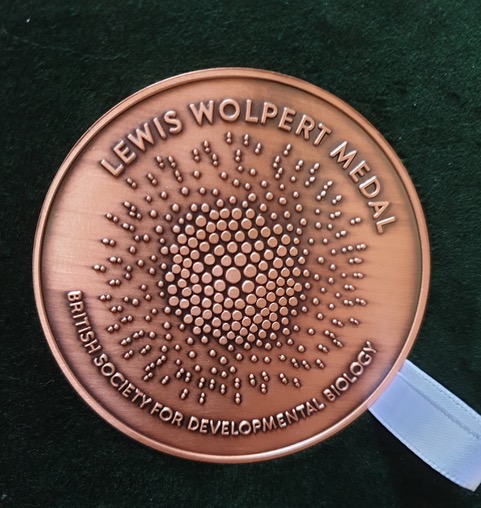
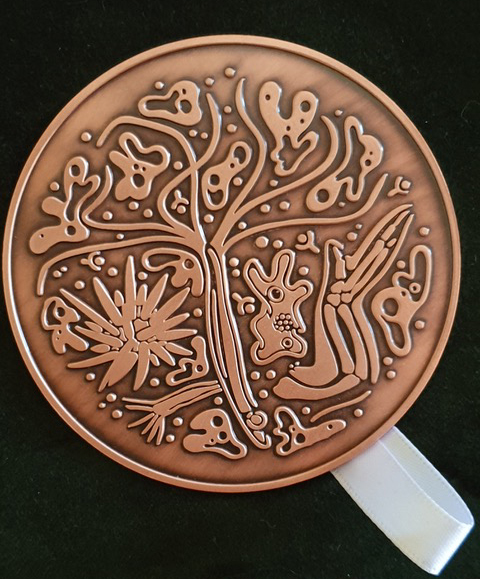 We are very happy to announce that this year’s winner of the BSDB Wolpert medal is Prof. Neil Vargesson from the University of Aberdeen.
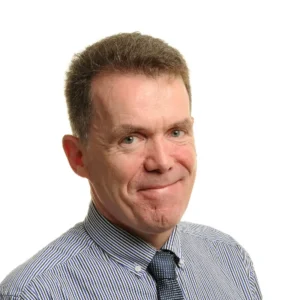
Neil Vargesson has made outstanding contributions to the public understanding of chemically-induced birth differences by making research on the mechanisms of action of Thalidomide and Primodos accessible to a wide audience. His advice has changed health policies and benefitted many affected families in the UK and worldwide.
Neil has worked on thalidomide for 20 years. His interest dates to when he was a child. Neil has a childhood family friend who was damaged by Thalidomide, and this led him to wanting to understand how the drug exerted its teratogenic effects. His research demonstrated that the antiangiogenic action of Thalidomide causes the damage and birth differences, and that this action on blood vessels can also explain the drug’s well-known time-sensitive actions. He also identified molecular targets for the drug’s action on the blood vessels.
More recently, Neil has also studied a chemical called Primodos – often known as ‘the forgotten thalidomide’. Primodos was used as a hormone pregnancy test and is alleged to have caused birth differences in many babies in the UK and Germany. His research showed that zebrafish embryos exhibit vascular, neural, eye and fin damage following exposure, resembling the damage seen in human survivors. Neil has been heavily involved with public engagement of developmental biology and has made his research accessible to a wide audience ranging from the general public, including school children and patients to Government policy makers.
Based on his research on Thalidomide, Neil is internationally recognised as an expert in the field. He has advised Thalidomide survivor groups, individuals, parliamentarians, lawyers, and many media organisations in the UK, US, Ireland, Italy, Germany, Malta, Canada, and Australia about how Thalidomide causes damage. He has created a Thalidomide learning module for the Royal Australasian College of Physicians, to teach and train medical practitioners in identifying Thalidomide embryopathy. This online resource is used by health care professionals from around the world, including the UK and is recommended by the UK Thalidomide Trust.
His research on Primodos has been featured in two Sky Documentaries hosted by Jason Farrell (both nominated for Royal Television Society awards) and in over 100 interviews in UK and international media. He has also advised Primodos survivors, parliamentarians and lawyers in the UK and Germany about his research on Primodos and what damage it can cause to embryos.
Neil’s passion for public engagement and public understanding is further demonstrated by numerous Outreach activities (including TechFest, Café Scientifique, podcasts, visiting Schools and writing numerous articles for ‘theconversation.com’) which inform different audiences about developmental biology and raise awareness of medicine safety.
Neil’s interactions with Governments and Policy makers have led to societal change. His expert advice on the effects of Thalidomide to the World Health Organisation has led to new guidance about Thalidomide embryopathy and its identification. It has resulted in the establishment of major compensation schemes in Canada and Australia resulting in the recognition and life-long compensation for Thalidomide survivors (more than $100M in compensation has been awarded so far). As a member of a multi-disciplinary committee (in the UK, Canada, and Australia) he reviews alleged survivors applications seeking recognition and compensation. His research on Primodos was debated in the House of Commons and helped establish an Independent Medicine and Medical Devices Safety Review on Primodos safety, which led to Recommendations for compensation and an apology to survivors from the UK Government. He has also advised the Medicines and Healthcare products Regulatory Agency (UK) and the European Medicines Agency about Primodos and medicine safety.
Neil’s contributions to science and public engagement, and the societal impact of his research, were recognised by the University of Aberdeen Principal’s Prize for Public Engagement with Research in 2017 and by election to the Fellowship of the Royal Society of Edinburgh in 2021.
- Cheryll Tickle
- Jim Smith